8 Quick Bible Journaling Ideas for Beginners in Under 15 Minutes

The fastest way in is to start small: jot a one-line reaction to a verse or sketch a tiny symbol in the margin. You need zero art skills to do either one. Pick a verse from a topical list like BibleManna’s Bible verses by topic, give yourself five minutes, and let the page be imperfect.
TL;DR:
- Starting with a one-line reaction or small symbol is enough to begin Bible journaling without art skills or a perfect page.
- Using a timer for 5 to 15 minutes and selecting a verse from a topical list simplifies the process and builds consistency.
- Protect thin Bible pages with waxed paper or clear gesso, and incorporate mistakes into the design to avoid damaging fragile pages.
- Prompt ideas like SOAP method, question writing, or gratitude lists help overcome blank page intimidation and foster regular practice.
- BibleManna’s categorized verse collections and random prompt generator streamline selecting meaningful scripture for journaling sessions.
Table of Contents
- Bible Journaling Ideas Grouped by Time and Skill Level
- How to Start Bible Journaling Today in Under 15 Minutes
- Supplies and Protecting Thin Bible Pages From Bleed
- Prompts and Templates for Blank-Page Paralysis
- How BibleManna Helps You Find the Right Verse Fast
- Perfection Isn’t the Point, Consistency Is
- Try BibleManna’s Verse Pages as Your Next Journaling Prompt
- Where to Learn More About Bible Journaling Methods
- Sources
- FAQ
Bible Journaling Ideas Grouped by Time and Skill Level
Most people quit before they start because they picture a Pinterest-worthy watercolor spread. Forget that. The ideas below range from a 90-second scribble to a 30-minute art session, and none of them require training.
Easy ideas (5 to 10 minutes):
- Copy a verse word for word, then write one sentence about why it caught your eye.
- Try a SOAP entry: Scripture, Observation, Application, Prayer, each in a single line.
- List three things you’re grateful for that connect to the passage.
- Write a short prayer that responds directly to what you just read.
- Ask one honest question you’d want to ask the author.
- Draw a single small symbol in the margin, a mustard seed for faith, a crown for kingship, a dove for peace.
- Underline or circle a repeated word and note how many times it shows up.
- Color code themes across a chapter (blue for promises, red for warnings, green for growth).
Extra creative ideas (15 to 30 minutes):
- Hand-letter a key phrase in the margin using a basic serif or bubble font.
- Collage a printed photo or ticket stub that connects the verse to a memory.
- Add washi tape borders around a passage to frame it visually.
- Attach a vellum overlay with a hand-drawn illustration so the original page stays untouched.
- Sketch a small scene from the narrative, even stick figures work.
- Create a watercolor wash background on a separate card, then glue it into the margin once dry.
- Stamp a repeating pattern (stars, waves, branches) around a verse that mentions nature or the sky.
- Build a mini timeline of a person’s story across several chapters.
Study-focused ideas (verse mapping and topical work):
- Do a verse mapping exercise: look up the original Hebrew or Greek word, note cross-references, and write a paraphrase.
- Pick a topic, like strength or patience, and track it across three or four different books.
- Compare two translations of the same verse side by side and note what shifts.
- Trace a promise of God from Genesis through the New Testament in a single spread.
Digital ideas:
- Use GoodNotes or Procreate to quickly hand-letter a verse without committing ink to paper.
- Download a printable template with pre-drawn borders and fill it in digitally or print it out.
- Keep a running digital gratitude log tied to specific verses you’ve journaled about.
A digital format removes the fear of ruining a page since undo is always an option, though it can also open the door to more scrolling and less stillness. Weigh that trade-off honestly before you pick your primary format.
How to Start Bible Journaling Today in Under 15 Minutes
You don’t need a plan, a class, or a blank Saturday afternoon. You need one verse and a timer.
- Choose a verse. Pull from memory, a devotional, or a topical page like BibleManna’s verses about strength if you’re not sure where to land.
- Read the surrounding context. Scan the paragraph before and after so you’re not journaling on a sentence ripped out of its setting.
- Pick one idea from the list above. Don’t scroll for the “best” one, just grab whichever fits your mood.
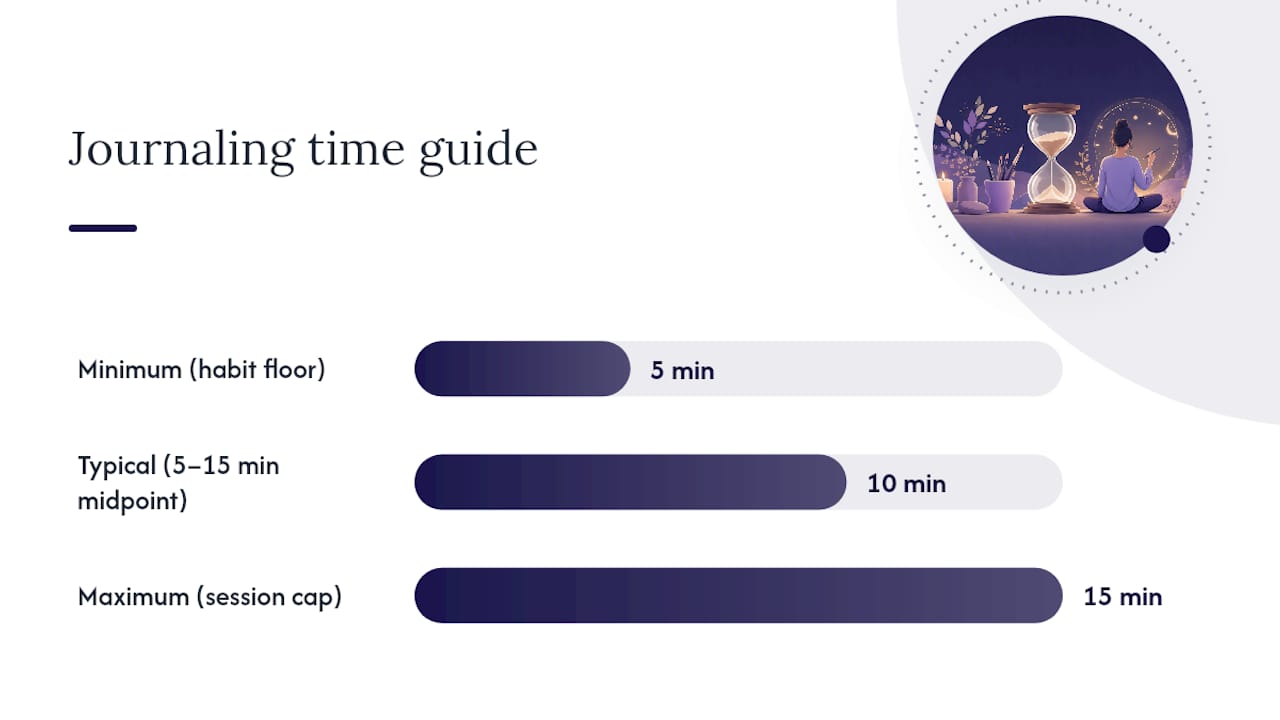
- Write or create for 5 to 15 minutes. Set a timer if that helps you stop overthinking.
- Close with a short prayer. One sentence is enough.
The SOAP method gives this routine a backbone when you don’t know where to begin. It’s a widely used framework built on four steps: Scripture (write out the verse), Observation (what does it actually say?), Application (what does this mean for my week?), and Prayer (respond to God directly). A one-line example: Scripture, “Be strong and courageous” (Joshua 1:9). Observation, God repeats this command right after Moses dies, when Joshua is scared and unprepared. Application, I’m avoiding a hard conversation this week out of fear. Prayer, “Give me courage today, not confidence in myself.”
If SOAP feels rigid, try verse-linked reflection (one paragraph, no structure), verse mapping (word study plus cross-references), or a two-column page split between gratitude and prayer requests.
Pro Tip: Anchor journaling to something you already do daily, like your first cup of coffee or the last five minutes before bed. A five-minute floor tied to an existing habit builds consistency far faster than an ambitious hour-long session you’ll skip by Wednesday.
Supplies and Protecting Thin Bible Pages From Bleed
You need three things to start: a Bible or notebook, a pen, and something to write with color. Lifeway’s beginner guide confirms that’s genuinely the floor, everything else is optional. From there, colored pencils, Micron pens or other fine-tip markers, washi tape, and clear gesso round out a solid starter kit.
Bible pages are typically very thin, thin enough that most markers and wet media bleed straight through to the other side.
That’s why so many journalers protect the page before they touch it:
- Slide waxed paper under the page you’re working on to catch any bleed-through before it hits the next passage.
- Brush on a thin layer of clear gesso as a primer, it seals the paper and gives ink and paint something sturdier to sit on.
- Create your art on separate cardstock or vellum, then attach it with washi tape if you’re nervous about committing directly to the page.
Mistakes happen, and that’s fine. If a line goes crooked or a color smears, incorporate it into the design, cover it with a washi strip or sticker, or paint a thin coat of gesso over the spot and start fresh. Don’t try to erase or scrub fragile pages; that’s how small mistakes become torn ones.
Prompts and Templates for Blank-Page Paralysis
A blank margin is intimidating. A prompt fixes that instantly.
- SOAP prompt: Write one line each for Scripture, Observation, Application, Prayer.
- One-word response: After reading, write the single word that best captures how the passage made you feel.
- Three blessings plus a verse: List three specific blessings, then pick one verse that ties them together.
- Question for the author: Write one question you’d ask the person who wrote this passage if they were sitting across from you.
- Timeline of faithfulness: Note one moment God showed up in your life that echoes the passage.
For layout, try a margin note beside the verse, a full page of art with the verse text pasted in the center, or a two-column split between the verse and your prayer response.
Stencils and tracing solve the “I can’t draw” fear. Hold a stencil in place with washi tape, trace lightly in pencil, then go over it in ink once you’re happy with the shape. Printed verse text on vellum works the same way, print it, trim it, tape it down.
Pro Tip: Build one reusable template in GoodNotes or Notability, save it, and duplicate it every time you sit down. You skip the “what do I even do” moment and go straight to writing.
How BibleManna Helps You Find the Right Verse Fast
A few ways to use it:
- Feeling low on motivation? Pull from the strength verses collection and journal your response.
- Want a surprise element in your routine? BibleManna’s random verse generator picks one for you, no decision fatigue.
- Not sure which Bible format suits your journaling style, wide-margin, interleaved, or hardcover? BibleManna’s journaling Bible guide walks through the options.
Perfection Isn’t the Point, Consistency Is
The strongest journals aren’t the prettiest ones. Practitioners who’ve stuck with this practice for years say the goal is engaging with Scripture, not producing gallery-worthy pages, and a crooked border or three-word reaction still counts as real engagement. Give yourself a five-minute floor and attach it to something you already do daily, right after your morning coffee or right before you turn off the lamp. Small and repeated beats ambitious and abandoned.
— Nkosi
Try BibleManna’s Verse Pages as Your Next Journaling Prompt
If you’re staring at a blank page wondering where to even start, skip the search and open a topical collection instead. BibleManna organizes scripture by the exact feelings and situations you’re already sitting with, strength, encouragement, healing, gratitude, so the prompt is already waiting for you.

Here’s the concrete next step: open the encouragement verses page right now, pick one that speaks to today, and use it as your entry. If you’d rather leave the choice to chance, BibleManna’s tools page includes a random verse generator built for exactly this kind of low-pressure, spontaneous prompt. Either way, you’ll have scripture in hand before you’ve spent ten minutes deciding what to write about.
Where to Learn More About Bible Journaling Methods
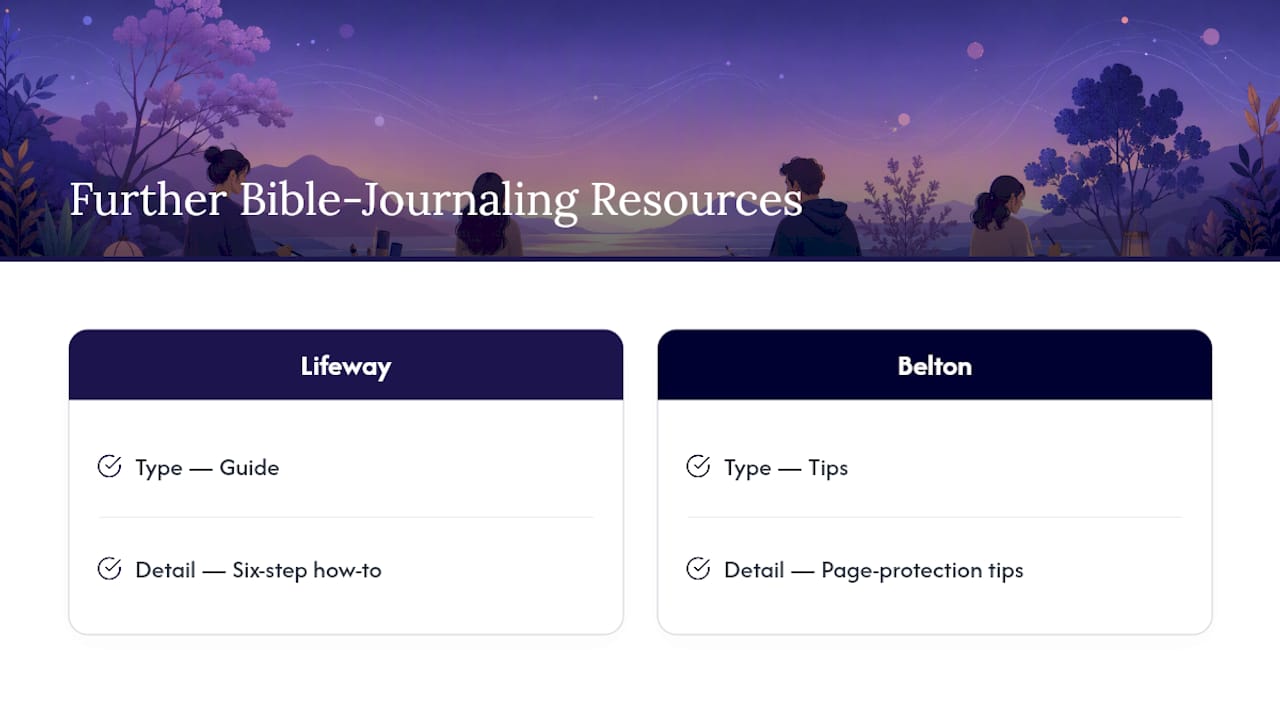
For deeper how-to steps, see Lifeway’s six-step guide and Belton Community Church’s page-protection tips.
Sources
- Easy Bible study method - SOAP (individual or small group method) — Salvos toolkit
- How to start Bible journaling in six easy steps — Lifeway
- Bible journaling for beginners — Belton Community Church
- How to fix mistakes in your Bible — Scribbling Grace
FAQ
What should I write in my Bible journal?
Start with a verse copy, a one-line reaction, or a SOAP entry covering Scripture, Observation, Application, and Prayer. Gratitude lists and honest questions for the biblical author work just as well when you’re low on time.
How do you start Bible journaling?
Pick one verse, read the surrounding context, choose a simple idea like a SOAP entry or a margin doodle, and spend 5 to 15 minutes writing or creating before closing with a short prayer. Tools like BibleManna’s topical verse pages make picking that first verse faster.
How do you journal daily biblically?
Link the habit to something you already do, right after coffee or right before bed, and cap your first sessions at five minutes so the routine sticks before you add complexity. Consistency matters more than length here.
What does Jesus say about journaling?
Scripture doesn’t mention journaling directly, but the practice of writing out and meditating on God’s words echoes passages like Deuteronomy 6:6 to 9, which calls believers to keep His words close and talk about them throughout the day. Bible journaling is one modern way people live that out.