Bedside Ready Bible Verses for Cancer Patients and Caregivers
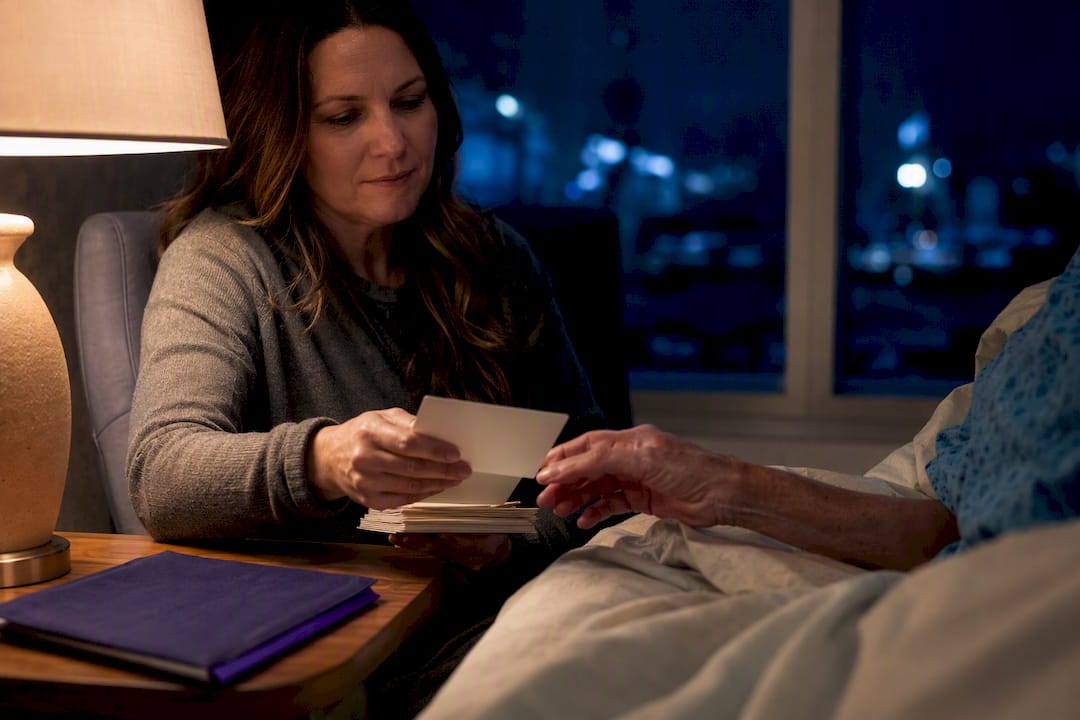
If you need comfort right now, hold onto Isaiah 41:10, Psalm 23:4, and Philippians 4:6–7. Together they promise God’s presence, protection through fear, and peace that steadies a racing mind. John 11:25–26 and Psalm 46 add hope beyond the diagnosis and refuge when everything feels unstable. A fuller list, grouped by exactly what you’re feeling, follows below.
TL;DR:
- Short verses like Psalm 46:1 or Philippians 4:13 are easiest to recall during crises and should be memorized beforehand for quick access.
- Isaiah 41:10 combines God’s presence, help, and calm, making it particularly effective for mid-night fears and emotional spirals.
- Verses about hope and healing, such as John 11:25–26, are especially relevant during end-of-life situations or when facing a terminal prognosis.
- Building routines like writing verse cards, practicing breathing prayers, or journaling can reinforce scripture’s comfort when overwhelmed.
- Using scripture tailored to specific moments, such as waiting in hospitals or during treatments, enhances emotional resilience and provides targeted support.
Table of Contents
- Bible verses for cancer, grouped by what you need right now
- Why these six verses come up again and again
- How to actually use these verses when you’re overwhelmed
- A short prayer for a hospital bed or a hard night
- Why BibleManna builds scripture collections this way
- What the conventional advice on scripture gets backwards
- Where to find more verses, tools, and healing scripture
- Sources
- FAQ
Bible verses for cancer, grouped by what you need right now
A diagnosis doesn’t hit in one emotion. It hits in waves, fear one hour, exhaustion the next, then a strange flicker of hope. The verses below are grouped so you can skip straight to what you’re feeling instead of scrolling through a list that doesn’t match your moment.
For waiting rooms and hospital stays
These are short enough to hold in your head when you can’t focus on a page.
- Psalm 46:1 — “God is our refuge and strength, an ever-present help in trouble.”
- Isaiah 41:10 — “Fear not, for I am with you; be not dismayed, for I am your God.”
- Psalm 34:17 — “The righteous cry out, and the Lord hears them; he delivers them from all their troubles.”
- Matthew 11:28 — “Come to me, all you who are weary and burdened, and I will give you rest.”
- Psalm 4:8 — “I will lie down and sleep in peace, for you alone, Lord, make me dwell in safety.”
For anxiety and racing thoughts
Philippians 4:6–7 anchors this group, but pair it with these when worry spikes before a scan or a treatment.
- Philippians 4:6–7 — “Do not be anxious about anything, but in every situation, by prayer and petition… present your requests to God.”
- 1 Peter 5:7 — “Cast all your anxiety on him because he cares for you.”
- John 14:27 — “Peace I leave with you; my peace I give you. Do not let your hearts be troubled.”
- Psalm 94:19 — “When anxiety was great within me, your consolation brought me joy.”
For strength during treatment
Chemo, radiation, surgery recovery. These verses speak to bodies running on empty.
- Isaiah 40:31 — “Those who hope in the Lord will renew their strength. They will soar on wings like eagles.”
- 2 Corinthians 12:9 — “My grace is sufficient for you, for my power is made perfect in weakness.”
- Philippians 4:13 — “I can do all this through him who gives me strength.”
- Psalm 73:26 — “My flesh and my heart may fail, but God is the strength of my heart.”
For peace when the mind won’t settle
- Psalm 23:4 — “Even though I walk through the darkest valley, I will fear no evil, for you are with me.”
- Isaiah 26:3 — “You will keep in perfect peace those whose minds are steadfast, because they trust in you.”
- John 16:33 — “In this world you will have trouble. But take heart! I have overcome the world.”
For hope and healing
- John 11:25–26 — “I am the resurrection and the life. The one who believes in me will live, even though they die.”
- Jeremiah 29:11 — “‘For I know the plans I have for you,’ declares the Lord, ‘plans to prosper you… and to give you hope.’”
- Psalm 30:2 — “Lord my God, I called to you for help, and you healed me.”
- James 5:14–15 — “Is anyone among you sick? Let them call the elders of the church to pray over them.”
For end-of-life and grief
These carry weight for patients facing a terminal prognosis and for families sitting beside them.
- Psalm 23:4 (again, differently) — its promise of companionship “through” the valley, not around it, is why hospice chaplains return to it so often.
- Revelation 21:4 — “He will wipe every tear from their eyes. There will be no more death or mourning or crying or pain.”
- 2 Corinthians 4:16–18 — “Though outwardly we are wasting away, yet inwardly we are being renewed day by day.”
- Psalm 116:15 — “Precious in the sight of the Lord is the death of his faithful servants.”
For caregivers and loved ones
Caregiving comes with its own exhaustion, and its own guilt for feeling exhausted. These are for you too.
- Galatians 6:9 — “Let us not become weary in doing good, for at the proper time we will reap a harvest.”
- Isaiah 40:29 — “He gives strength to the weary and increases the power of the weak.”
- 2 Corinthians 1:3–4 — “The God of all comfort… comforts us… so that we can comfort those in any trouble.”
- Nehemiah 8:10 — “The joy of the Lord is your strength.”
Bookmark BibleManna’s broader collection of Bible verses about comfort if you want more than what fits here, and encouraging Bible verses for words to pass along to someone else fighting alongside you.
Why these six verses come up again and again
Certain passages show up in nearly every list of scripture for cancer support, and it’s worth knowing why, because the reason usually points to exactly when you should reach for that verse.
- Isaiah 41:10 packs four promises into one sentence: presence, calm, help, and active support. It’s frequently cited as a go-to verse for cancer patients precisely because it does not just say “don’t be afraid.” It says why not to be afraid, and that reasoning is what makes it stick during a midnight spiral of what-ifs.
- Psalm 23:4 doesn’t promise you’ll avoid the valley. It promises you won’t walk it alone. That distinction is why hospice caregivers and chaplains keep returning to this verse over softer, more optimistic ones. A scholar who was himself a cancer patient wrote about finding unexpected precision in this psalm’s ancient imagery of shepherding through real danger, not around it.
- Philippians 4:6–7 gives you an actual instruction, not just comfort. Bring the request. Say it out loud or in your head. The peace it promises “transcends understanding,” meaning you don’t need to feel calm first for it to work.
- Psalm 46 opens with refuge and strength, then spends the rest of the chapter describing chaos, nations in uproar, mountains falling into the sea, as if to say: peace isn’t the absence of disaster. It’s God’s presence inside it.
- John 11:25–26 is Jesus speaking just before raising Lazarus. It’s the rare verse that addresses death directly instead of working around it, which is exactly why it belongs in end-of-life conversations.
- 2 Corinthians 4:16–18 admits the body is “wasting away” in the same breath it claims something is being renewed. That honesty is rare in comfort literature, and it’s part of why hospital chaplain resources include it on memorization lists for patients preparing for extended stays.
Guides built for hospital waiting rooms consistently favor short, image-rich lines over longer theological passages, because a six-word phrase is something you can actually hold in your head while a nurse is drawing blood.
How to actually use these verses when you’re overwhelmed
Reading a verse once rarely helps at 3 AM. Building it into a habit does. Here are three ways to make scripture available exactly when you need it.
- Make bedside or phone cards. Write three or four verses on index cards, or save them as a locked-screen note. Keep the wording short. A verse you have to squint at during a scan defeats the purpose.
- Practice a breathing prayer. Inhale on the first half of a verse, exhale on the second. “The Lord is my refuge” (inhale), “and my strength” (exhale). Repeat five times before a procedure. This works because the rhythm slows your breathing at the same time it occupies your mind.
- Journal with a prompt, not a blank page. Try: “What verse calms me when I can’t control the outcome?” Writing the answer, then writing why, moves you from raw fear toward something closer to prayer, a shift therapeutic writing resources for cancer patients point to directly.
If you’re the caregiver, don’t read a long passage to someone in pain or heavily medicated. Offer one line, ask if they want to hear more, and let silence be acceptable if they say no.
Pro Tip: Keep your absolute shortest verses, Psalm 46:1, Philippians 4:13, on a single card separate from the rest. When anxiety spikes hard and fast, you won’t have the bandwidth to find a longer passage. You need the one you can recite from memory in under five seconds.
A short prayer for a hospital bed or a hard night
Sometimes you don’t want a verse. You want your own words, and they won’t come. Use this as a starting point, then make it yours.
- For the patient: “God, I’m scared, and I don’t want to pretend I’m not. Be near me the way Isaiah 41:10 promises. Give me one moment of peace tonight, not the whole picture, just this hour.”
- For the caregiver: “God, I don’t know what to say to the person I love. Give me the right words, or give me the grace to just sit here quietly. Let them feel you through me, even when I don’t feel strong.”
Pair either prayer with one verse from the list above and let that be the whole practice for the day. You don’t need more than that.
Why BibleManna builds scripture collections this way
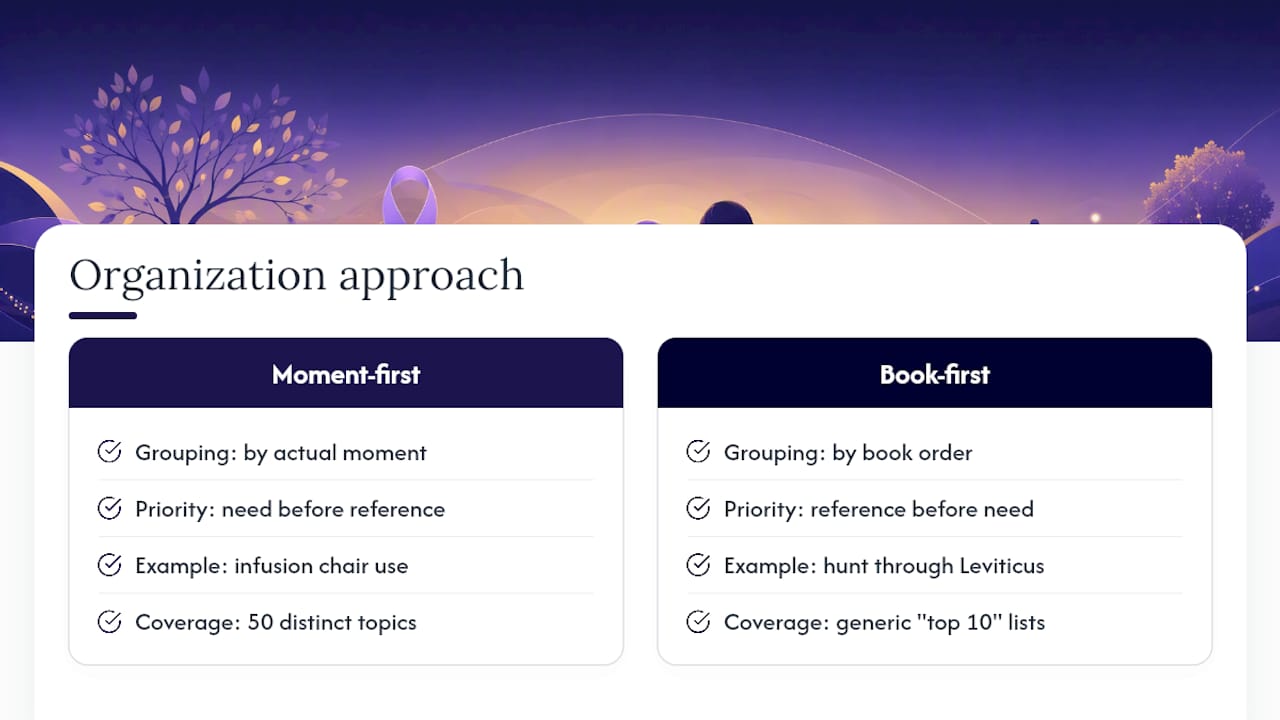
At BibleManna, we group verses by the actual moment someone is in, not by book order or a generic “top 10” list, because a person sitting in an infusion chair doesn’t want to hunt through Leviticus to find Isaiah 41:10. That’s the whole reason our topic library exists.
Comfort during illness isn’t abstract. It’s specific to the hour: the wait before results, the sleepless night, the conversation you don’t know how to have. Scripture works best when it meets you exactly there, which is why we organize around need first and reference second.
BibleManna’s site covers 50 distinct topics spanning emotions, relationships, and life events, each with context and background so a reader isn’t left guessing why a verse made the list.
What the conventional advice on scripture gets backwards
Most lists of comfort verses hand you fifty passages and no guidance on when to use which one. That’s the gap worth naming: quantity isn’t the problem for someone facing cancer, timing is. A grieving spouse at 2 AM doesn’t need Romans 8. They need something they can say in one breath before the tears start again.
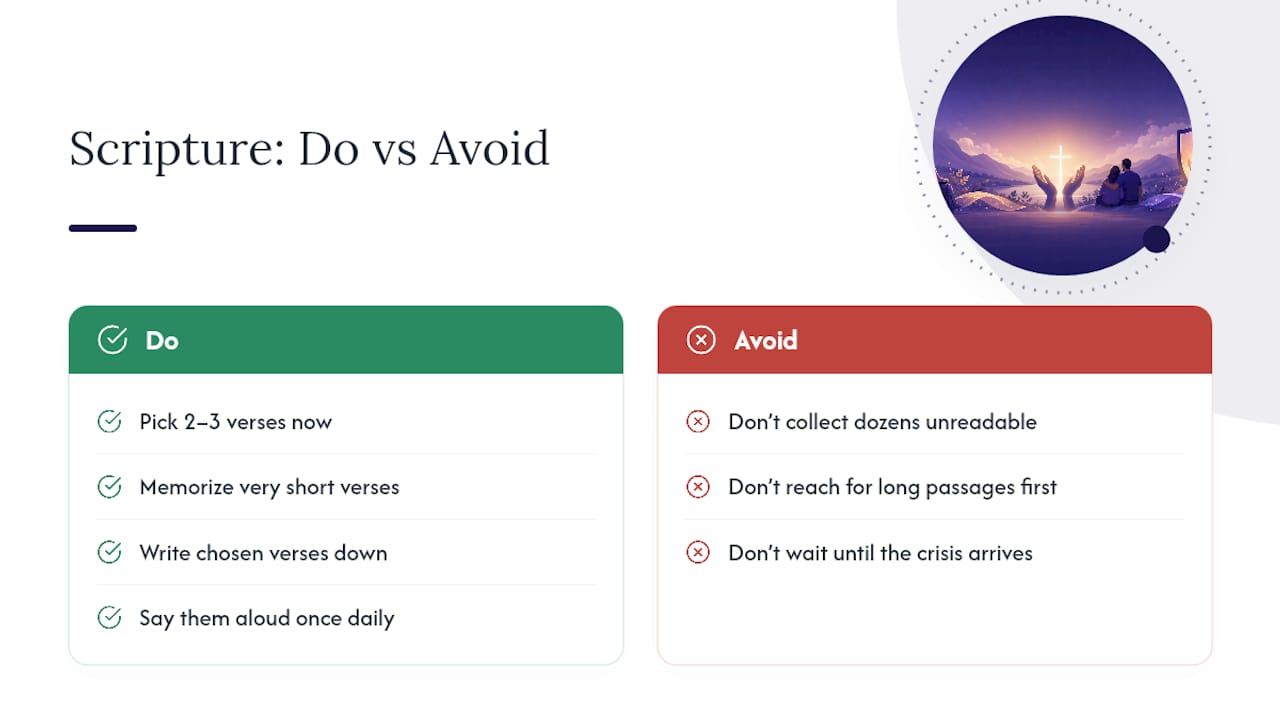
The overrated habit is reaching for the longest, most theologically complete passage first. The underrated move is memorizing the shortest one, Psalm 46:1 or Philippians 4:13, because that’s the one your mind can actually retrieve under stress. Depth matters, but only after the short verse has done its job of getting you through the next five minutes.
What should come first: pick two or three verses now, while you can think clearly, not later when you can’t. Write them down. Say them out loud once a day before you need them in a crisis. The devotional reflections at The Broken Seam make a similar point about scripture-based comfort working best as rehearsed habit, not last-minute rescue.
— Nkosi
Where to find more verses, tools, and healing scripture
There are other ways to search for comfort verses, a concordance, a general web search, a devotional app, but most of them make you dig. BibleManna organizes scripture by exactly the situation you’re in, which means you spend less time searching and more time actually reading.

For a wider set of passages beyond what fits in one article, browse the full Bible verses by topic collection, or go straight to the healing scripture guide built specifically for illness and recovery. Save or print a few as verse cards for a bedside table or a hospital bag, and if you want a moment of unplanned encouragement, try the random verse generator for a passage you weren’t expecting to need.
Sources
- 8 Bible Verses for Cancer Patients
- An ancient Near East scholar and cancer patient looks at Psalm 23
- 6 Bible verses for when you’re waiting at the hospital
- Verses to memorize for the hospital
FAQ
What is the miracle prayer for cancer?
There’s no single official “miracle prayer,” but many Christians pray a version that asks God for healing while surrendering the outcome, often paired with James 5:14–15 on prayer for the sick. A simple bedside prayer paired with a verse like Isaiah 41:10 works the same way.
What is a strong message for cancer patients?
A strong message names the fear honestly and points to a specific promise, not a vague sentiment. “You’re not walking this alone, God is with you the way Isaiah 41:10 says” lands harder than generic encouragement.
What psalm is for cancer healing?
Psalm 23, especially verse 4, is the psalm most consistently cited for comfort during serious illness, because it promises companionship through danger rather than the removal of it. Psalm 46 and Psalm 30:2 are also frequently paired with it for hope around healing.
How do you pray to God about cancer?
Start honestly: name the fear, ask for presence and strength, and bring the specific request the way Philippians 4:6–7 instructs. Many caregivers pair their own words with a short scripture, using the verse as an anchor when their own language runs out.
Which Bible verse helps most during chemo or treatment?
Isaiah 40:31 and Philippians 4:13 are widely used during treatment because they speak directly to physical exhaustion and renewed strength, which makes them easier to hold onto than longer, more abstract passages.