Bible Word Study for Comfort, Guidance, and Life Events

In this guide, “bible word study” means curated, theme-based scripture collections: verse lists paired with short context notes and a suggested next step you can use today. If you came here looking for Greek and Hebrew lexical analysis, that is a different discipline. What you will find here are ready-to-use verse packs for grief, anxiety, forgiveness, relationships, and more, organized so you can open a topic and start reading in under a minute. The American Bible Society’s State of the Bible research and the ESV Scripture Journal both point to the same conclusion: engaged, context-aware scripture reading supports wellbeing in measurable ways. Biblemanna’s curated verse collections by topic are built on that same principle.
Key Takeaways
Curated, context-aware topical verse collections are the most accessible and wellbeing-supported form of personal scripture study available to everyday readers.
| Point | Details |
|---|---|
| Definition reminder | “Bible word study” here means curated topical verse lists with short context notes, not Greek/Hebrew lexical analysis. |
| Context is non-optional | Always check translation, genre, historical setting, and canonical fit before applying a verse to a major decision. |
| Use collections actively | Meditate, journal, pray, or share one collection per week; writing out verses increases retention over passive reading. |
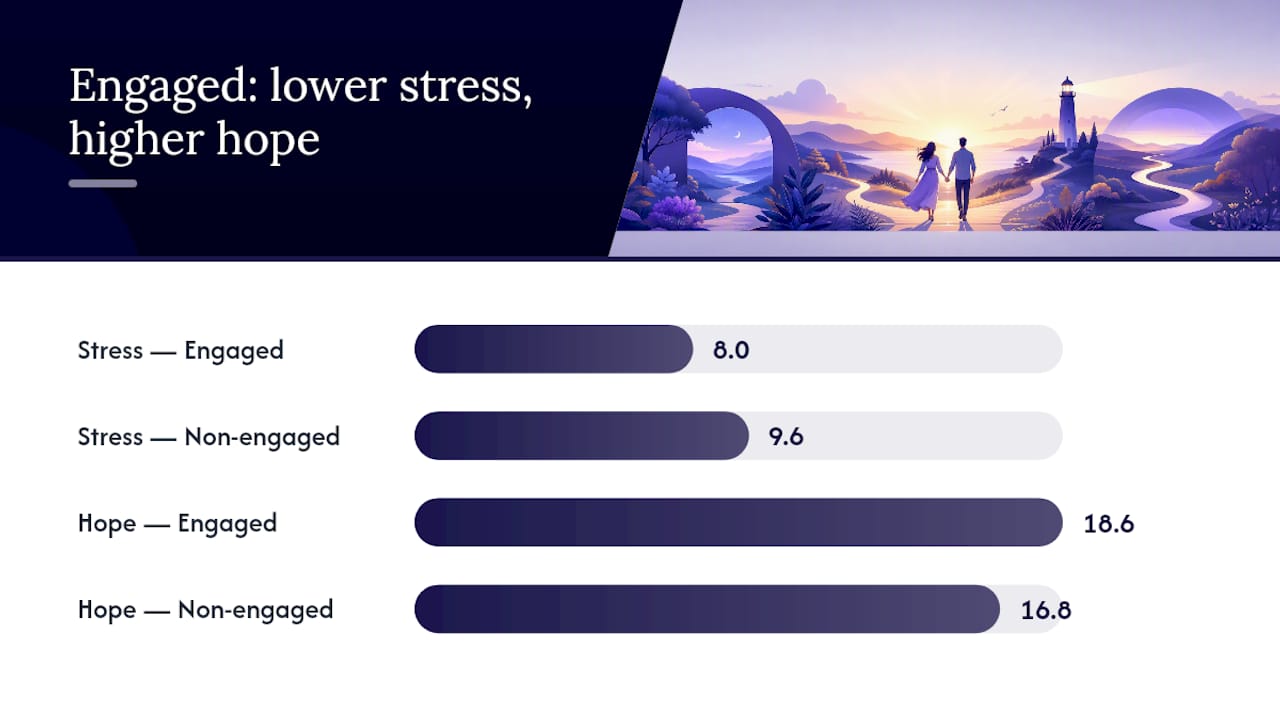
| Wellbeing evidence | ABS research links weekly Bible engagement to lower stress (8.0 vs. 9.6) and higher hope (18.6 vs. 16.8). |
| Biblemanna next step | Open a Biblemanna topic page, pick one collection, and bookmark it for daily use this week. |
Table of Contents
- What is a bible word study and why does context matter?
- How to use a curated verse collection today
- Starter verse collections for eight common needs
- How a reliable collection is organized
- How to build your own mini word study in four steps
- Trauma-informed reading and when to seek professional help
- How to choose a trustworthy curated verse collection online
- What curated collections taught me about reading Scripture well
- Biblemanna’s ready-made collections are a good place to start
- Sources
- FAQ
What is a bible word study and why does context matter?
Curated verse collections are genuinely useful, but only when paired with brief context notes that keep verses from being misapplied. A verse pulled from its chapter and used as a life slogan can mean something the original author never intended. That is not a minor risk; it is how well-meaning people end up with theology that hurts rather than heals.
Four context principles help you check any verse quickly:
- Literal meaning: What do the words actually say in the passage, not what a popular quote makes them sound like?
- Historical setting: Who wrote this, to whom, and under what circumstances? A promise to Israel in exile reads differently than a universal command.
- Literary grammar: Is this poetry, prophecy, law, or narrative? Psalm 22 opens with “My God, my God, why have you forsaken me?” — a lament, not a statement of abandonment.
- Canonical synthesis: Does this verse align with the Bible’s broader teaching, or does it seem to contradict it? If it seems to contradict, the context check is not finished.
As Dr. Peter J. Carter argues in Context Is King, context is not optional for faithful interpretation. Skipping it does not make a verse more personal; it makes it more dangerous.
Pro Tip: Never use a single verse alone to make a major life or pastoral decision. Run a quick context check first: Who is speaking? To whom? In what genre? That 30-second habit prevents most misapplication.
How to use a curated verse collection today
The four most effective ways to engage a topical collection are meditation, journaling, prayer, and sharing. Each takes 5–15 minutes and works with any topic page.
Meditate. Read one verse slowly, three times. Pause between readings. Ask: What does this say about God? What does it say about me? A 10-minute sit with Psalm 46:10 (“Be still and know that I am God”) does more than skimming ten verses.
Journal. Writing out Scripture increases retention far beyond passive reading, a point the ESV Scripture Journal approach is built around. Try these prompts: Where do I feel this verse is true in my life right now? Where do I struggle to believe it? What would change if I acted on it this week?
Pray. Turn the verse into a direct address to God. Philippians 4:6 becomes: “Lord, I am anxious about ___. I am bringing it to you now.” Two or three verses prayed through this way is a complete session.
Share. A small group can work through one topic collection in 20–30 minutes: read the collection aloud (5 min), review the context note together (5 min), discuss one question per verse (10–15 min), close in prayer using a verse from the list (5 min). Simple, repeatable, and grounded.
Starter verse collections for eight common needs
Each collection below gives you 6–10 verse references, a one-sentence context note, and a concrete next step. These are starting points, not exhaustive lists. Use a topical index to expand any of them.
Comfort Psalm 34:18; Isaiah 41:10; Matthew 11:28–30; 2 Corinthians 1:3–4; Revelation 21:4 Context: These verses span lament poetry, prophetic reassurance, and apocalyptic hope — all addressed to people in real distress, not hypothetical suffering. Next step: Meditate on one verse per day for five days.

Anxiety Philippians 4:6–7; 1 Peter 5:7; Psalm 55:22; Isaiah 26:3; Matthew 6:25–27 Context: Paul wrote Philippians from prison; his peace was not circumstantial. That setting matters when the verse feels impossible. Next step: Pray Philippians 4:6 aloud with your specific worry named.
Grief Psalm 22:1–5; John 11:35; Romans 8:38–39; Revelation 21:4; Lamentations 3:22–23 Context: Lament is a biblical genre, not a failure of faith. Jesus wept at Lazarus’s tomb even knowing what came next. Next step: Journal one honest sentence about your grief, then read Lamentations 3:22–23.
Forgiveness Matthew 6:14–15; Ephesians 4:32; Colossians 3:13; Luke 17:3–4; 1 John 1:9 Context: Forgiveness in the New Testament is relational and ongoing, not a one-time transaction. Luke 17 shows Jesus expecting repeated forgiveness. Next step: Name one person or situation and pray Colossians 3:13 over it.
Relationships 1 Corinthians 13:4–7; Romans 12:10; Proverbs 17:17; John 15:13; Ephesians 4:2–3 Context: 1 Corinthians 13 was written to a fractured church, not as a wedding reading. Its demands are communal, not romantic. Next step: Share one verse with someone you are in conflict with, without commentary.
Guidance and decisions Proverbs 3:5–6; James 1:5; Psalm 32:8; Isaiah 30:21; John 16:13 Context: Proverbs 3:5–6 is wisdom literature, not a promise of a specific outcome. It describes a posture, not a formula. Next step: Write out your decision, then pray James 1:5 and wait 24 hours.
Strength Isaiah 40:31; Psalm 46:1; 2 Corinthians 12:9–10; Philippians 4:13; Nehemiah 8:10 Context: Philippians 4:13 (“I can do all things through Christ”) is about contentment in hardship, not unlimited capability. Paul had just described learning to be content in poverty. Next step: Memorize Isaiah 40:31 this week. Biblemanna’s strength collection has 57 verses to extend this study.
Work Colossians 3:23–24; Proverbs 14:23; Genesis 2:15; Ecclesiastes 9:10; 1 Thessalonians 4:11–12 Context: Work appears in Genesis before the fall, meaning vocation is not a consequence of sin. That reframes Monday morning. See Biblemanna’s work topic page for the full collection. Next step: Read Colossians 3:23 before your next workday begins.
Pro Tip: Bookmark the topic page in your browser or save it to a note-taking app like Notion or Apple Notes. Paste the verse references into a daily reminder so the collection stays in front of you.
How a reliable collection is organized
Good collections include brief metadata that protects context. When you land on a verse list online, scan for these signals in under 10 seconds:
- Translation label — which Bible version is quoted (ESV, NIV, NKJV, etc.)
- Book and genre tag — is this poetry, epistle, prophecy, or narrative?
- Short context note — one or two sentences on the original audience or setting
- Cross-references — related verses that confirm or expand the point
- Suggested next step — a concrete application (meditate, pray, memorize)
- Editorial curation signal — evidence a human editor selected and organized the list, not an algorithm
Biblemanna’s 50-topic taxonomy covers all of these. Each topic page carries translation notes and short editorial context alongside the verse text.
How to build your own mini word study in four steps
The method is search, select, contextualize, apply. It takes about 20 minutes the first time and gets faster.
- Search: Use a topical index (Nave’s Topical Bible, a concordance, or a digital verse finder) to pull 15–20 candidate verses on your topic.
- Select: Cut the list to 6–10 verses that speak most directly to your situation. Prioritize verses from different genres (a psalm, an epistle, a proverb) for breadth.
- Contextualize: For each verse, write one sentence: who is speaking, to whom, and in what genre. That is your context note. Use a biblical glossary to clarify unfamiliar terms quickly.
- Apply: Choose one or two concrete actions: memorize one verse, journal a response to another, or pray through a third.
Example mini-study on “comfort in suffering”: Start with Psalm 34:18 (lament poetry, David in distress), add 2 Corinthians 1:3–4 (Paul’s letter to a troubled church), and include Romans 8:18 (doctrinal letter, eschatological perspective). Three verses, three genres, one coherent theme.
Pro Tip: Label any original-language notes as “advanced research” and keep them separate from your main collection. Mixing lexical claims into a topical list without clear labeling can mislead readers who take the collection at face value.
Trauma-informed reading and when to seek professional help
Scripture reading can support wellbeing, but trauma-informed approaches and professional help are sometimes necessary before or alongside it.
The American Bible Society’s State of the Bible research found that scripture-engaged individuals reported meaningfully lower stress scores (8.0 vs. 9.6) and higher hope scores (18.6 vs. 16.8) compared to those who did not engage. A separate Baylor University study commissioned by ABS found that a trauma-informed Bible-reading program produced statistically significant drops in depression, anxiety, anger, and complicated grief compared to a control group.
| Measure | Scripture-engaged | Non-engaged |
|---|---|---|
| Stress score | 8.0 | 9.6 |
| Hope score | 18.6 | 16.8 |
| PTSD/depression | Reduced (Baylor study) | Control group |
These findings are encouraging, not prescriptive. Scripture is not a substitute for clinical care.
Red flags that call for professional support: persistent suicidal ideation, severe dissociation, inability to function at work or in relationships, or re-traumatization triggered by specific passages. If any of these are present, contact a licensed counselor, a crisis line (such as the 988 Suicide and Crisis Lifeline in the US), or a trained pastor before continuing independent scripture reading.
Pro Tip: When working through trauma, pair short topical reading with a trained facilitator or counselor. The Baylor/ABS program worked precisely because it combined scripture with mental-health best-practice education.
How to choose a trustworthy curated verse collection online
Use this checklist before trusting any collection:
- Translation is clearly labeled on every verse
- A short context note (1–2 sentences) accompanies the list
- An editorial curation signal is present (author, organization, or editorial note)
- Topic taxonomy is organized and specific, not just a keyword dump
- Cross-references or related verses are included
- A suggested next step or application is provided
Red flags: no context notes at all, single-verse slogans with no surrounding text, vague application (“apply this to your life”), missing translation data.
Decision rule: Use the collection if it meets at least 5 of these 6 items. A collection that clears only 3 or 4 is worth reading cautiously; one that clears fewer than 3 is better skipped.
What curated collections taught me about reading Scripture well
The conventional wisdom says you need a seminary degree or a Greek lexicon to study the Bible seriously. That is wrong, and it keeps a lot of people from starting. What actually matters is whether the collection you are reading was put together with care: a real context note, a named translation, a human editor who thought about application. Those three things do more for faithful reading than any technical tool.
What I have noticed, working through topical collections across grief, anxiety, and forgiveness, is that the context note is the hinge. Without it, a verse is a fortune cookie. With it, even a short one, the verse becomes a window into a real situation that someone else survived. That shift from slogan to story is where scripture actually helps.
Try one collection this week. Pick a topic that is live for you right now, not one that feels safe. Then come back and share which verse landed, or request a collection for a life event not yet covered.
Biblemanna’s ready-made collections are a good place to start
Biblemanna provides editorially curated verse collections organized across 50+ topics, each with translation notes, short context, and a suggested next step. The topic taxonomy covers emotions, relationships, life events, and theological concepts, so you can find a relevant collection in seconds rather than building one from scratch.
Collections like the encouragement verses page show the format clearly: verse text, source translation, a brief editorial note, and a path forward. The site also supports parallel translation comparison and a random verse generator for daily use. For readers who want a ready-made starting point rather than a blank page, browse the full verse library and save the topic that fits your situation today.
Sources
- Context Is King: Why Interpretation Demands Context | Theology In Focus
- New Research Confirms Engaging with the Bible Is Key for Well-Being and Self-Care - American Bible Society
- The Ultimate Guide to Finding Specific Scripture for Any Life Situation | Psalmlog
FAQ
What does “bible word study” mean in this guide?
Here it means curated, theme-based verse collections with short context notes and suggested applications, organized by topic such as grief, anxiety, or forgiveness.
How many verses should a starter collection include?
Six to ten verses is the practical range. Fewer than six limits breadth; more than ten makes a single session hard to complete meaningfully.
Can I use a topical verse collection for a small group?
Yes. A simple format works well: read the collection aloud, review the context note together, discuss one question per verse, and close in prayer using a verse from the list. The whole session fits in 20–30 minutes.
How do I know if a verse collection is trustworthy?
Check for five of six quality signals: labeled translation, short context note, editorial curation, organized topic taxonomy, cross-references, and a suggested next step. Biblemanna’s collections meet all six.
When should I seek professional help instead of scripture reading?
Seek a licensed counselor or crisis line if you experience persistent suicidal ideation, severe dissociation, or inability to function. Scripture reading can support wellbeing but is not a substitute for clinical care in a crisis.