Fear of the Lord Meaning: A Clear Biblical Guide

Fear of the Lord means reverent awe, worshipful submission, and filial love toward God — not cowering terror, but the kind of deep respect that reshapes how you live. The Hebrew and Greek Scriptures use the phrase dozens of times, and in nearly every case the point is the same: this fear draws you closer to God rather than driving you away.
Three things this reverent fear consistently produces:
- Wisdom — the capacity to see life from God’s perspective
- Obedience — a willing, love-driven response to God’s commands
- Humility — an honest reckoning with who God is and who you are
That single verse frames the entire concept. Wisdom does not start with intelligence or experience. It starts with a right posture before God.
Table of Contents
- What does the fear of the Lord mean in the Bible?
- What do the Hebrew and Greek words actually mean?
- How to cultivate a healthy fear of the Lord
- How do different Christian traditions understand the fear of the Lord?
- A Biblemanna scripture pack on the fear of the Lord
- Key Takeaways
- What living in the fear of the Lord actually feels like
- Biblemanna helps you find the right scripture for this
- Useful sources
- FAQ
What does the fear of the Lord mean in the Bible?
The phrase appears from Genesis to Revelation, and its meaning shifts slightly depending on context — which is exactly what you would expect from a concept that spans poetry, prophecy, law, and epistle.
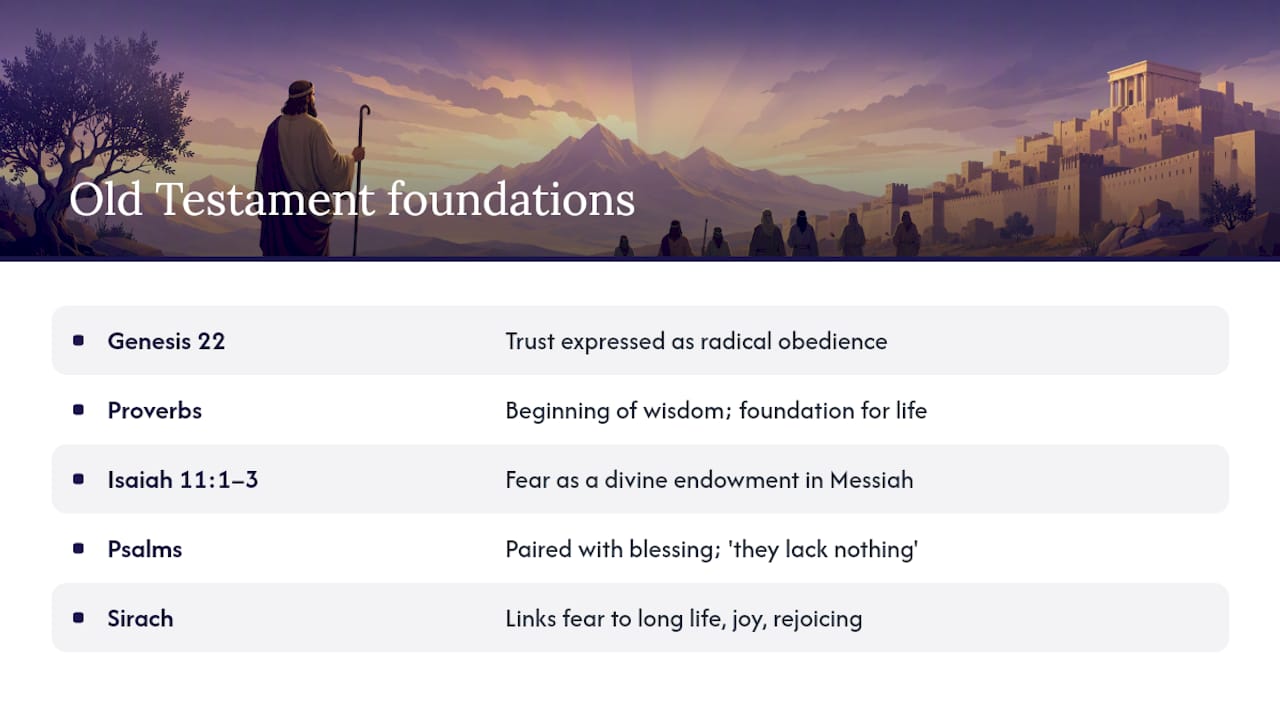
Old Testament foundations
Genesis 22 gives the first major narrative test. After Abraham demonstrates his willingness to offer Isaac, the angel of the Lord declares: “Now I know that you fear God.” The fear on display here is not panic. It is total trust expressed through radical obedience — Abraham acts on God’s word even when it costs him everything.
Proverbs returns to the theme relentlessly. Proverbs 1:7 calls it the beginning of wisdom; Proverbs 9:10 deepens that claim: “The fear of the Lord is the beginning of wisdom, and knowledge of the Holy One is understanding.” Wisdom literature treats fear of God as the foundation of a well-ordered life, not a preliminary emotion to outgrow.
Isaiah 11:1–3 adds a messianic dimension. The Spirit of the Lord resting on the coming Branch includes “the spirit of the fear of the Lord” as one of seven gifts. Fear here is a divine endowment, something the Messiah himself carries — which tells you it cannot be merely anxiety.
The Psalms are saturated with the theme. Psalm 111:10 echoes Proverbs almost word for word. Psalm 34:9 pairs fear with blessing: “Fear the Lord, you his holy people, for those who fear him lack nothing.” Sirach, in the deuterocanonical tradition, links fear with long life, joy, and a crown of rejoicing — pastoral evidence that biblical fear of God rarely carries the modern sense of dread.
New Testament reframing
The New Testament does not abandon the concept — it sharpens it.
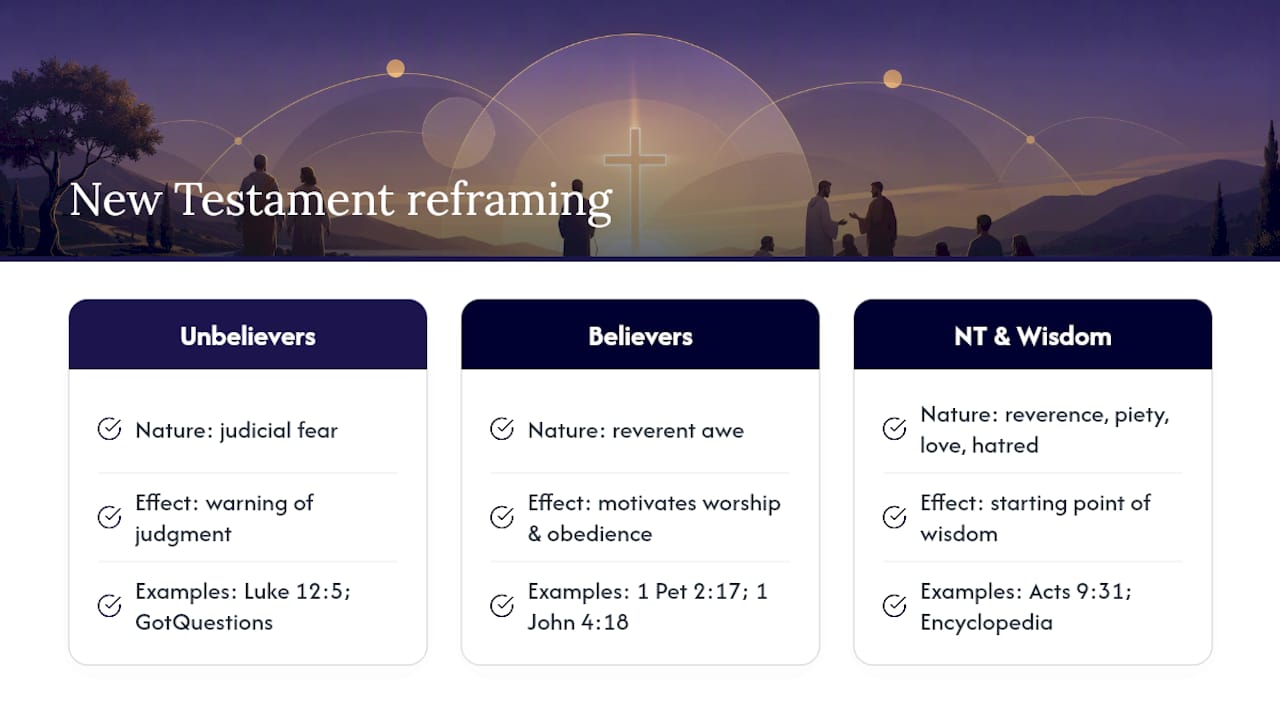
Luke 12:5 contains one of Jesus’ most direct statements on the subject: “Fear him who, after your body has been killed, has authority to throw you into hell.” This is judicial language, and Jesus means it. The fear of God here functions as a corrective to the fear of human opinion.
Hebrews 10:31 is equally stark: “It is a dreadful thing to fall into the hands of the living God.” The author is addressing professing believers who are considering apostasy — the warning is real and intentional. GotQuestions rightly notes that for unbelievers, fear of God appropriately includes fear of judgment, while for believers it matures into reverent awe that motivates worship and obedience.
Acts 9:31 describes the early church as “living in the fear of the Lord and in the comfort of the Holy Spirit” — both at once, without contradiction. First Peter 2:17 commands it simply: “Fear God.” First John 4:18 adds the necessary counterweight: perfect love casts out fear. The two passages are not in conflict. John is addressing the paralyzing terror of condemnation; Peter is calling for reverent submission. Different fears, different contexts.
The Encyclopedia.com entry on fear of the Lord synthesizes this range well: the phrase covers reverence, piety, love of God, and hatred of sin across both testaments, with the sapiential literature consistently framing it as the starting point of wisdom.
What do the Hebrew and Greek words actually mean?
Translation choices shape theology more than most readers realize. The English word “fear” covers a wide range of emotional states, but the original languages are more precise.
Hebrew terms
- Yir’ah (יִרְאָה): the primary word for fear of the Lord in the Old Testament. Its semantic range includes awe, reverence, and worshipful respect. It is the word used in Proverbs 1:7, Genesis 22, and Isaiah 11. Yir’ah can describe terror in some contexts, but when directed toward God in wisdom literature, it consistently carries the sense of awe-filled reverence.
- Pachad (פַּחַד): a stronger word, closer to dread or alarm. It appears in Job 3:25 and Isaiah 2:10 and tends to describe a more visceral, reactive fear. Theologians generally distinguish pachad from yir’ah when discussing the healthy fear of the Lord.
How to cultivate a healthy fear of the Lord
Growing in filial fear is a practice, not a one-time insight. These steps are ordered from foundational to sustaining.
- Meditate on God’s holiness in Scripture. Isaiah 6, Revelation 4, and Psalm 99 are starting points. Read slowly and let the imagery do its work.
- Practice regular confession and repentance. Naming sin specifically before God reinforces the reality of his holiness and your dependence on his mercy.
- Pray using God’s attributes. Begin prayers by naming who God is — holy, just, merciful, omniscient — before making requests. This reorients the posture of prayer.
- Memorize key passages. Proverbs 1:7, Proverbs 9:10, and Luke 12:5 are short enough to carry with you and weighty enough to reshape thinking over time.
- Engage in corporate worship. Gathered worship, done well, produces a shared sense of awe that private devotion alone rarely replicates.
- Use a structured reading plan. Biblemanna’s topical scripture collections on wisdom and trust give you a focused path through the passages that matter most.
Two short prayer prompts to anchor the practice:
- “Lord, show me your holiness so that I see myself clearly and you rightly.”
- “Father, let my obedience today come from love, not from fear of what I might lose.”
For readers who want to pair fear of the Lord with a deeper sense of God’s protection and care, Bible verses about trusting God offer a natural complement to the reverence passages.
How do different Christian traditions understand the fear of the Lord?
The concept is shared across traditions, but each emphasizes a different facet.
Catholic teaching
The Catechism of the Catholic Church lists fear of the Lord as one of the seven gifts of the Holy Spirit, alongside wisdom, understanding, counsel, fortitude, knowledge, and piety. It is explicitly filial: the gift fills the believer with sovereign respect for God and inclines them to avoid offending him. Pope Francis has consistently emphasized that this fear is not servile but relational — a joyful awareness of God’s grandeur that produces peace rather than paralysis.
Evangelical and Reformed
John Piper and the Desiring God tradition stress that conversion reshapes fear. Before grace, the prospect of God’s judgment is terrifying and appropriate. After grace, that same God becomes the object of reverent, joyful awe. Fear does not disappear; it is transformed. Desiring God’s treatment of this theme argues that the forgiven believer fears God more in one sense — more deeply, more personally — because they now understand what they have been saved from.
Anglican, Lutheran, and classical reflection
C. S. Lewis drew on Rudolf Otto’s category of the “numinous” to describe the awe before divine holiness that precedes and underlies all religious experience. For Lewis, this sense of the uncanny and holy is not an obstacle to faith but its raw material. The Lutheran tradition similarly holds that the law produces a necessary fear that prepares the heart for the gospel, while the gospel transforms that fear into filial love. For a visual reminder of this reverence in daily life, Christian artwork for your home can serve as a tangible prompt for the kind of awe these traditions describe.
Comparative summary by tradition:
| Tradition | Distinctive emphasis |
|---|---|
| Catholic | Fear as a gift of the Holy Spirit; filial, sacramental, and communal |
| Evangelical/Reformed | Fear transformed by grace into joyful, reverent obedience |
| Anglican/Lutheran | Numinous awe as the foundation of genuine religious experience |
A Biblemanna scripture pack on the fear of the Lord
Key verses grouped by theme
Wisdom:
- 72 Bible verses about wisdom — full curated collection
Awe and worship:
Warning:
Trust:
- Bible verses about trusting God — full curated collection
7-day reading plan
| Day | Passage | Reflection prompt |
|---|---|---|
| 1 | Proverbs 1:7 | What would it look like for wisdom to begin here, today? |
| 2 | Isaiah 6:1–8 | How does Isaiah’s response to God’s holiness mirror your own? |
| 3 | Psalm 34:1–10 | Where does fear and blessing overlap in your experience? |
| 4 | Luke 12:1–7 | What human opinion are you more afraid of than God’s? |
| 5 | Hebrews 10:26–31 | How does this passage reframe your understanding of grace? |
| 6 | Genesis 22:1–18 | What does Abraham’s obedience reveal about the nature of trust? |
| 7 | 1 John 4 | How does love and fear coexist in a mature faith? |
Key Takeaways
Fear of the Lord means filial reverence and worshipful awe before God’s holiness, not servile terror, and it produces wisdom, obedience, and humility in the believer’s daily life.
| Point | Details |
|---|---|
| Filial, not servile | Healthy fear of the Lord is reverent love, not dread of punishment. |
| Rooted in Scripture | Proverbs 1:7, Isaiah 11:1–3, and Luke 12:5 each frame fear as awe-driven obedience. |
| Shared across traditions | Catholic, evangelical, and Anglican traditions all affirm filial fear, each with a distinct emphasis. |
| Cultivated by practice | Scripture meditation, confession, and corporate worship build this reverence over time. |
| Biblemanna scripture pack | Biblemanna’s curated fear and wisdom verse collections offer a structured starting point for readers wanting to grow in this area. |
What living in the fear of the Lord actually feels like
The fear of the Lord is one of those concepts that sounds severe until you actually live inside it. What you find there is not a permanent state of trembling. It is more like the feeling of standing in a cathedral that is far larger than you expected — a combination of smallness and safety that you did not know could coexist.
What strikes me most, reading across these traditions, is how consistently the fear of the Lord produces freedom rather than constriction. The person who genuinely fears God is less afraid of everything else. They are less controlled by what others think, less paralyzed by failure, less anxious about outcomes they cannot control. That is not a paradox — it is the logic of having one ultimate reference point. When God is the one whose opinion finally matters, the noise from every other direction gets quieter.
The practical encouragement is simple: start with Scripture, not with feelings. Read Isaiah 6 slowly. Sit with Psalm 99. Let the text do what feelings cannot sustain on their own. And if you are in a community of faith, pursue this in company — the awe that corporate worship generates is genuinely different from what you can manufacture alone. Bible verses about courage are a useful companion here: the same God whose holiness produces awe is the one who says, repeatedly, “Do not be afraid.”
Biblemanna helps you find the right scripture for this
The passages on fear of the Lord are spread across dozens of books, and finding the ones that speak to your specific situation takes time you may not have. Biblemanna collects them for you, organized by theme and paired with brief context so you understand not just what a verse says but why it matters.

The Bible verses by topic page is the fastest way in. Search fear, wisdom, or trust and you get a curated list with verse text, background, and meaning — ready to use for personal study, a small group, or a reading plan like the one above. Whether you are working through the 7-day plan in this article or looking for a single verse to anchor your morning, Biblemanna gives you the scripture you need without the search.
Useful sources
- Catechism of the Catholic Church (section on gifts of the Holy Spirit)
- Fear of the Lord — Encyclopedia.com
- Fear of the Lord — Wikipedia
- What does it mean to have the fear of God? | GotQuestions.org
- Forgiven to fear God | Desiring God
- Ask the Register: Fear of the Lord — Lincoln Diocese
- BibleManna — Find Scripture by Topic & Theme
Key scripture references: Genesis 22; Proverbs 1:7; Proverbs 9:10; Isaiah 11:1–3; Psalm 34:9; Luke 12:5; Hebrews 10:31; Acts 9:31; 1 Peter 2:17; 1 John 4:18.
FAQ
What is the deep meaning of fear of God?
Fear of God means filial reverence — a worshipful awe before God’s holiness that motivates obedience and wisdom rather than paralysis. It is the recognition that God is wholly holy and that standing before him rightly requires both humility and love.
What is the true fear of the Lord?
The true fear of the Lord is filial, not servile: it flows from love and awe rather than dread of punishment. Proverbs 1:7 identifies it as the foundation of wisdom, and the Catholic Catechism lists it as a gift of the Holy Spirit that inclines believers to avoid offending God out of reverence, not fear of consequences.
What are the characteristics of fear of God?
A person with a healthy fear of God shows reverent worship, willing obedience, sorrow over sin, humility, and a hunger for Scripture. They are also, paradoxically, less controlled by the fear of people — Luke 12:5 suggests that fearing God properly displaces lesser fears.
How do you know if you have the fear of the Lord?
Signs include approaching God with genuine awe in prayer and worship, feeling real grief when you sin rather than just regret at being caught, and making moral decisions based on God’s presence rather than the risk of exposure. If what you feel is primarily paralyzing terror or an inability to approach God, that points to servile fear rather than filial reverence.
Does fear of the Lord mean being afraid of God?
Not in the modern sense of terror. The Hebrew yir’ah and Greek phobos both carry a range of meanings, and in wisdom literature the dominant sense is awe-filled reverence. First John 4:18 confirms that the fear of condemnation is cast out by love — what remains is the reverent, joyful submission that Scripture consistently commends.