Memorize John 3:16 in Spanish: 3 Chunk Method, Literal Gloss & Audio
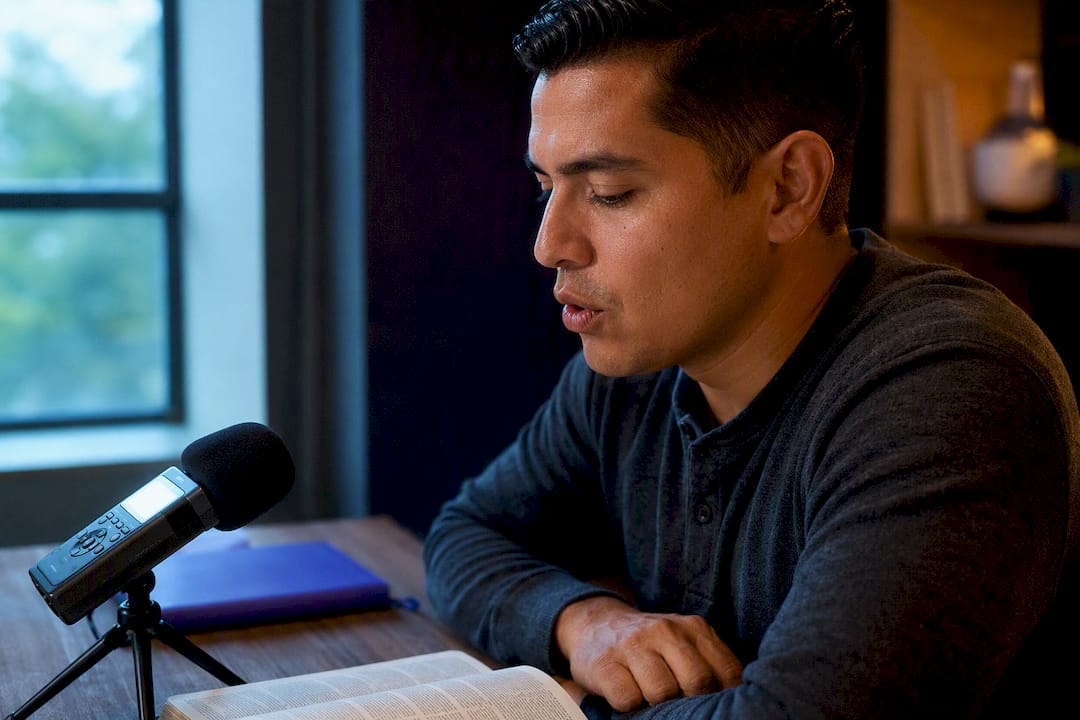
“Porque de tal manera amó Dios al mundo, que ha dado a su Hijo unigénito, para que todo aquel que en él cree, no se pierda, mas tenga vida eterna” is the Reina-Valera 1960 rendering of John 3:16 in Spanish, where “John” becomes “Juan,” so the verse is cited as Juan 3:16. In plain English, it reads: “For God so loved the world that he gave his only Son, so that everyone who believes in him will not perish but have eternal life.”
TL;DR:
- The Reina-Valera 1960 is the most commonly memorized Spanish version, but the NVI offers smoother, more conversational phrasing with a slight variation in wording.
- “Unigénito” is a key theological term retained in the RVR1960 and NVI, emphasizing the unique nature of the Son, while other versions may replace it with simpler words.
- Memorizing the verse in three parts—God’s love, the gift of the Son, and the outcome of belief—can improve retention and understanding.
- Contextual passages like John 3:14–21 and Romans 5:8 deepen comprehension of the verse’s meaning about grace and salvation.
- Pronunciation tips for Spanish sounds aid in accurate recitation, especially for non-native speakers aiming for authentic delivery.
Table of Contents
- Which Spanish Translation of John 3:16 Should You Use?
- Breaking Down Juan 3:16 Phrase by Phrase
- What Does John 3:16 Actually Mean?
- Where John 3:16 Sits in Its Story
- Audio, Video, and Memorization Tools for Juan 3:16
- How to Pronounce Juan 3:16 in Spanish
- Why BibleManna Groups John 3:16 With Faith, Love, and Salvation
- Find More Verses and Printable Tools on BibleManna
- Where to Verify the Original Spanish Text
- Sources
- FAQ
Which Spanish Translation of John 3:16 Should You Use?
Spanish Bible readers usually run into four or five versions of Juan 3:16, and the differences matter more than they first appear. Pick the one that matches how you’ll use it: memorization, group study, or quoting in a devotional.
- Reina-Valera 1960 (RVR1960): “Porque de tal manera amó Dios al mundo, que ha dado a su Hijo unigénito, para que todo aquel que en él cree, no se pierda, mas tenga vida eterna.” This is the version most Spanish-speaking churches quote from memory, and you can check the exact wording on BibleGateway’s RVR1960 page.
- Nueva Versión Internacional (NVI): “Porque tanto amó Dios al mundo que dio a su Hijo unigénito, para que todo el que cree en él no se pierda, sino que tenga vida eterna.” The structure is smoother for modern readers, and “porque tanto amó” reads more naturally in conversational Spanish than “de tal manera amó.”
- Reina-Valera 2000 (RV2000): Keeps close to the 1960 wording but updates a handful of archaic terms. You can compare it directly on Bibliatodo’s Juan 3:16 page, which also lists other Reina-Valera variants side by side.
- Dios Habla Hoy (DHH): Uses simpler vocabulary aimed at readers with less formal Spanish education, often swapping “unigénito” for “único” (only/unique) to avoid a theological term some readers find unfamiliar.
The one word worth watching is “unigénito.” RVR1960 and NVI both keep it, since it captures “one of a kind” more precisely than “único,” which just means “only.” If you’re memorizing for group recitation, RVR1960 is still the safest default because it’s what most congregations already know by heart. For a broader look at how English translations handle the same verse, BibleManna’s translation comparison tool lines up KJV, ESV, NIV, NLT, and NASB renderings side by side.
Breaking Down Juan 3:16 Phrase by Phrase
Memorizing a verse in a second language sticks better when you understand each chunk rather than swallowing the whole sentence at once. Here’s the RVR1960 text split into manageable pieces, with a literal English gloss for each.
- “Porque de tal manera amó Dios al mundo” → “Because in such a way God loved the world.” “De tal manera” is an intensifier, closer to “so greatly” than a simple “so.”
- “que ha dado a su Hijo unigénito” → “that he has given his only-begotten Son.” “Unigénito” combines “uni” (one) and “génito” (born), meaning uniquely born, not merely “his only child.”
- “para que todo aquel que en él cree” → “so that everyone who believes in him.” “Creer en” means to trust or believe in, not just to believe facts about someone.
- “no se pierda” → “will not perish/be lost.” “Perderse” carries the sense of being lost or ruined, not just physical death.
- “mas tenga vida eterna” → “but may have eternal life.” “Vida eterna” is a fixed phrase throughout the New Testament for life that continues beyond physical death.
Pro Tip: Memorize the verse in three chunks instead of one long block: (1) God’s love for the world, (2) the gift of his Son and the condition of belief, (3) the outcome of not perishing but having eternal life. Say each chunk five times before moving to the next, then link all three together.
What Does John 3:16 Actually Mean?
The verse makes one central claim: God’s love for humanity moved him to give his Son, and believing in that Son is what leads a person from spiritual ruin to eternal life. Martin Luther reportedly called it “the Bible in miniature,” and the label fits because the verse compresses the entire arc of the gospel message into a single sentence.
Two ways to apply it beyond just memorizing the words:
- As a personal anchor. Read it slowly when you need a reminder that faith is a response to a gift already given, not a performance you have to earn.
- As a conversation starter. Because so many people already recognize the reference, quoting Juan 3:16 in Spanish opens natural doors to talk about what belief and eternal life mean in practice.
If you want to go deeper on the theology behind the gift and the grace it describes, The Broken Seam’s overview of grace is a solid next read. For the broader biblical theme this verse sits inside, BibleManna’s collection of Bible verses about salvation groups related passages together so you can study the idea, not just the isolated verse.
Where John 3:16 Sits in Its Story
John 3:16 doesn’t stand alone. It’s the hinge point of a nighttime conversation between Jesus and Nicodemus, a Pharisee who came asking how a person can be “born again.” Jesus had just finished explaining spiritual rebirth when he pivoted to explain why that rebirth is even possible: God’s love and the gift of his Son.
Three passages worth reading alongside it:
- John 3:14–21 gives the full context, including the “lifted up” serpent imagery Jesus uses just before verse 16, and the warning about judgment that follows it.
- Romans 5:8 restates the same idea from a different angle, that Christ died for us “while we were still sinners,” reinforcing that the gift precedes any merit.
- 1 John 4:9–10 connects God’s love directly to sending his Son “so that we might live through him,” almost echoing John 3:16 word for word decades later.
Reading the surrounding chapter keeps the verse from becoming just a slogan. It’s an answer to a specific question about what it means to start over spiritually.
Audio, Video, and Memorization Tools for Juan 3:16
Hearing the verse spoken aloud, or singing it, locks it into memory faster than silent reading alone. Seeds Family Worship produced a Spanish-language video setting John 3:16 to music, built for kids but genuinely useful for anyone memorizing by repetition.
- Record yourself reading Juan 3:16 aloud and play it back during a commute or workout.
- Make flashcards splitting the verse into the same three chunks used earlier: God’s love, the gift and belief, the outcome.
- Print verse cards to keep visible on a mirror, dashboard, or desk using BibleManna’s free tools for random verse practice and quizzes.
Pro Tip: Sing the verse, even without a tune of your own. Melody engages a different part of memory than plain speech, which is exactly why children’s Bible songs work so well for adults too.
How to Pronounce Juan 3:16 in Spanish
A few sounds trip up English speakers reading the RVR1960 text aloud, and getting them right makes recitation smoother.
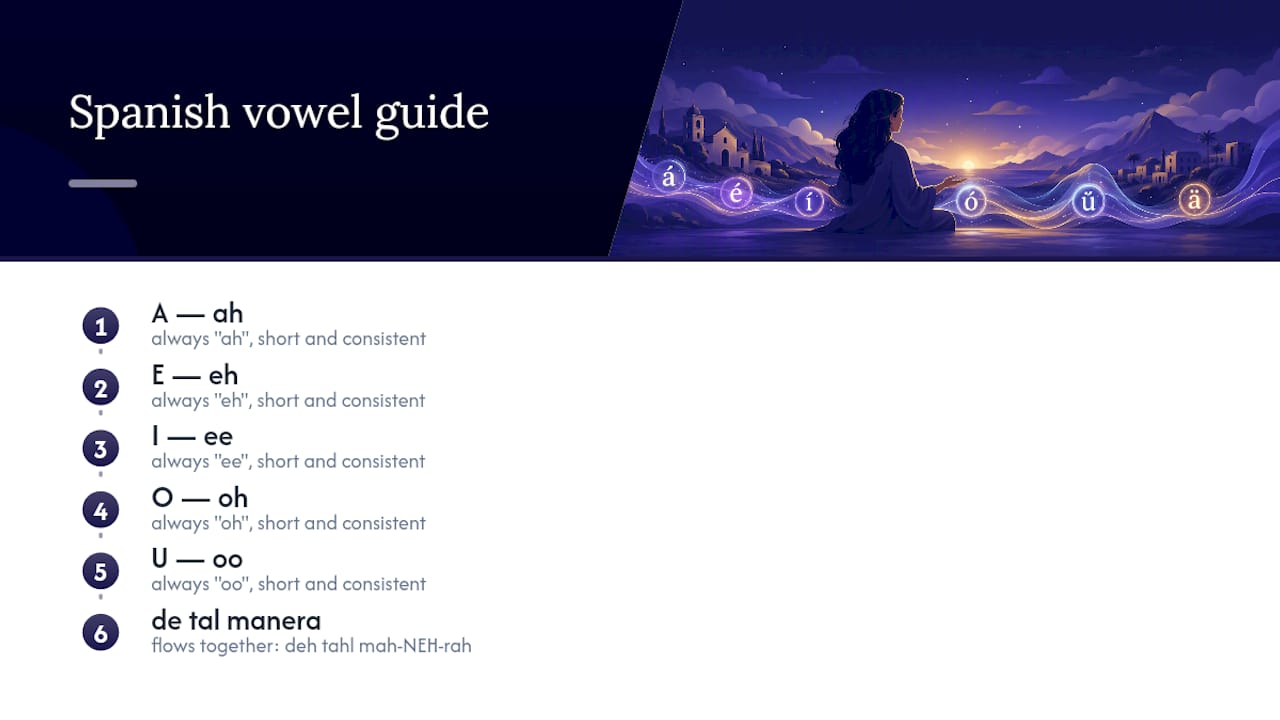
“Porque” is pronounced POR-keh, with a rolled or tapped “r.” “Amó” stresses the final syllable: ah-MO. “Unigénito” breaks into oo-nee-HEH-nee-toh, where the Spanish “g” before “e” sounds like the English “h.” “Aquel” is ah-KEL, and “cree” is KREH-eh, two syllables, not one. “Pierda” is PYEHR-dah, and “eterna” is eh-TEHR-nah, with stress on the second syllable.
Spanish vowels stay short and consistent, unlike English vowels, which shift depending on the word. Every “a” sounds like “ah,” every “e” like “eh,” and every “o” like “oh,” no matter where they fall in a sentence. That consistency actually makes Spanish easier to sound out once you know the five vowel sounds cold. If you’re practicing with a native speaker or an audio recording, listen for how “de tal manera” flows together almost as one word, deh tahl mah-NEH-rah, rather than four separate ones. Reading it slowly first, then speeding up once the rhythm feels natural, works better than trying to match native speed on the first attempt.
Why BibleManna Groups John 3:16 With Faith, Love, and Salvation
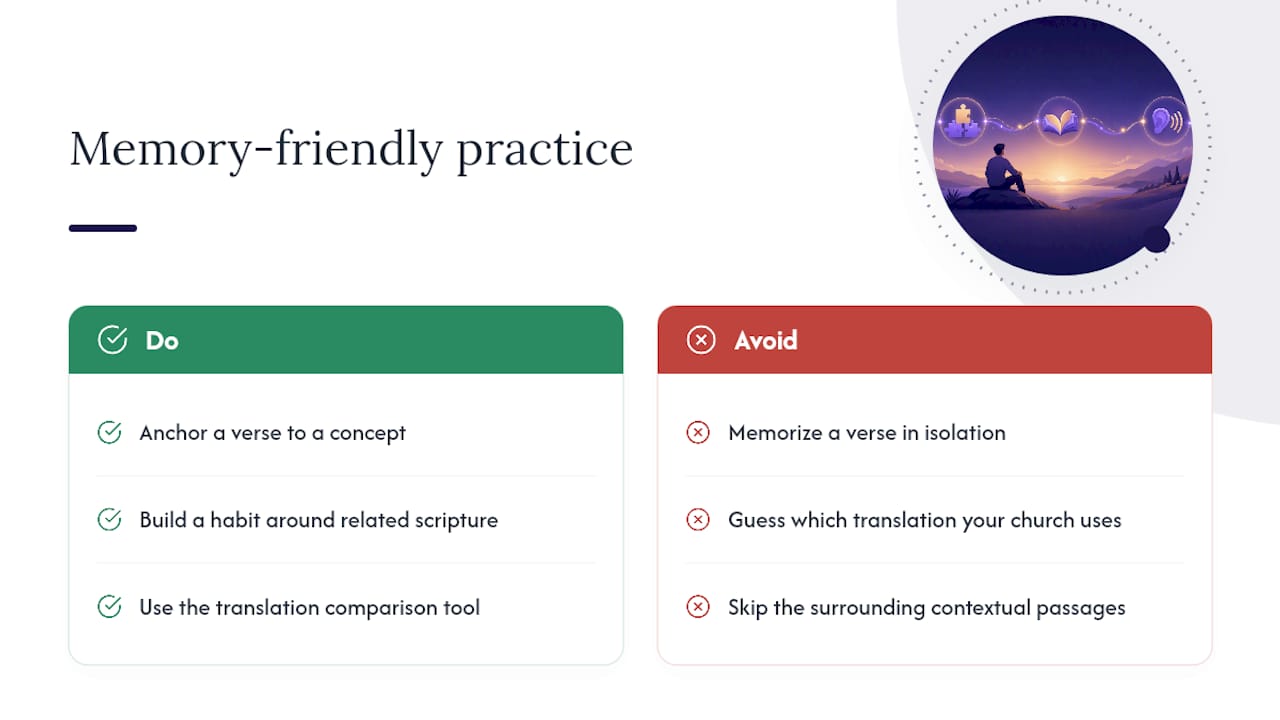
A single verse rarely does its best work in isolation. BibleManna’s John 3:16 topic page places the verse alongside related themes like faith and salvation, so a reader studying “belief” or “eternal life” finds this verse right next to the other scripture that explains those same ideas.
That structure matters for memorization specifically. Verses stick better when they’re anchored to a concept, not floating alone. Someone building a study habit around faith-related scripture will run into John 3:16 naturally, already framed by the surrounding context that gives it weight. The translation comparison tool plays a similar role for anyone weighing whether to memorize the RVR1960 or NVI wording. Comparing translations side by side, rather than guessing which one your church uses, saves the frustration of relearning a verse later because the wording didn’t match.
— Nkosi
Find More Verses and Printable Tools on BibleManna
Once Juan 3:16 is memorized, the natural next step is building it into a habit rather than a one-off. BibleManna’s topical library gives you a faster path to that than searching scripture by chapter and verse, since every collection is already organized around the emotion or life situation you’re actually dealing with.

Browse BibleManna’s full topical verse collection to find printable verse cards, related passages grouped by theme, and context notes written for exactly the kind of quick, practical study this verse invites. If encouragement or strength is what you’re after next, the Bible verses about encouragement collection picks up where a verse like John 3:16 leaves off. Start with the topic page, save the verse card, and build your next study session around it.
Where to Verify the Original Spanish Text
For readers who want to double-check wording or compare additional translations, these sources publish the primary Spanish text directly.
- Juan 3:16 on BibleGateway (RVR1960)
- Juan 3:16 on BibleStudyTools
- Juan 3:16 on Bibliatodo (RV2000)
- United Bible Societies, which oversees translation stewardship across Spanish-language Bible editions
- American Bible Society, a resource on Bible access and translation projects
Sources
- Juan 3:16 - Reina-Valera 1960
- Juan 3:16 - RVR / BibleStudyTools (translation pages)
- Juan 3:16 - Biblia Reina Valera 2000
FAQ
What is the actual translation of John 3:16 in Spanish?
The most common rendering, from Reina-Valera 1960, is: “Porque de tal manera amó Dios al mundo, que ha dado a su Hijo unigénito, para que todo aquel que en él cree, no se pierda, mas tenga vida eterna.”
How do you say “John 3:16” in Spanish?
You say “Juan tres dieciséis” out loud, and it’s written as “Juan 3:16,” since the book of John is called “Juan” in Spanish Bibles, as noted on SpanishDictionary.com.
What is the Spanish version of the Book of John in the Bible?
It’s called “Juan” in every major Spanish translation, including Reina-Valera, Nueva Versión Internacional, and Dios Habla Hoy.
What does Juan 3:16 say in the Reina-Valera translation?
It reads: “Porque de tal manera amó Dios al mundo, que ha dado a su Hijo unigénito, para que todo aquel que en él cree, no se pierda, mas tenga vida eterna,” matching the RVR1960 text on BibleGateway.