Start Lectio Divina in 10 Minutes: Four Simple Steps and Ready Verses

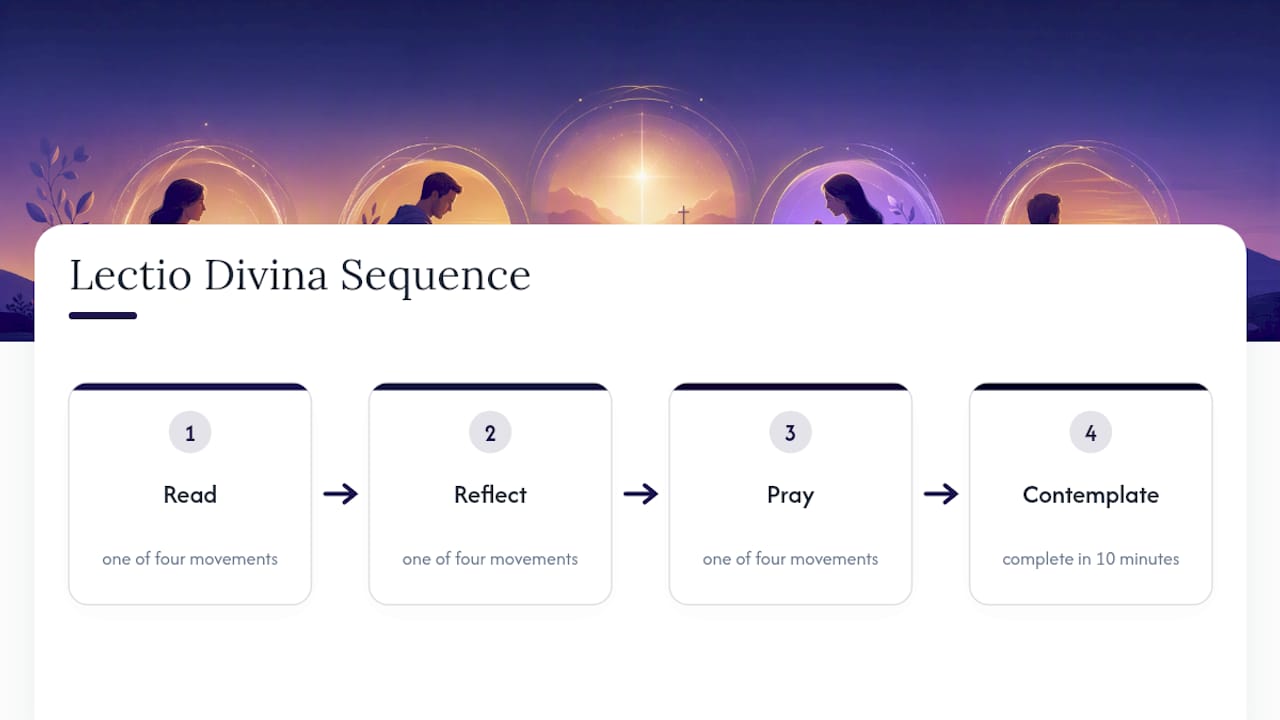
Lectio divina steps follow four movements: Lectio (read), Meditatio (reflect), Oratio (respond), and Contemplatio (rest). A single session is typically short and flexible, adaptable to your available time, and it’s meant to feel like a quiet conversation with God, not a homework assignment. The instructions below walk through each movement so you can start tonight.
TL;DR:
- Choosing a short, meaningful passage relevant to your feelings helps you stay focused and prevents overthinking during practice.
- Regularly repeating the same verse across days deepens understanding and strengthens the habit over time.
- Picking passages from themed lists or using a random verse generator minimizes decision fatigue, encouraging daily practice.
- Maintaining a humble, honest attitude in prayer fosters genuine reflection and prevents the exercise from becoming purely mental.
Table of Contents
- How Do You Prepare for Lectio Divina?
- Lectio: How Do You Read Slowly?
- Meditatio: How Do You Reflect on What You Read?
- Oratio: How Do You Turn Reflection into Prayer?
- Contemplatio: What Does Resting in Silence Look Like?
- What Are Some Variations on Daily Lectio Divina?
- Where Can You Find Passages to Use?
- A Small Habit, Repeated
- Let BibleManna Help You Choose What to Read Next
- Where to Read More About Lectio Divina
- Sources
- FAQ
How Do You Prepare for Lectio Divina?
Pick a quiet spot and a time you can return to daily, whether that’s a chair by a window or a bench on a walk. Posture matters less than consistency. Sitting, standing, or slow walking all work.
Choose a short passage before you sit down, so you’re not scrambling for a verse mid session. A single verse or a few verses is usually sufficient. The daily Gospel reading, a psalm, or a topical list of verses all make good starting points.
- Open with a brief prayer inviting the Holy Spirit to guide your attention.
- Set a soft timer for a short period so you’re not clock watching.
- Keep the same passage for a few days if it still has something to say.
Pro Tip: If you can’t decide what to read, don’t overthink it. Grab one verse from a topic that matches how you’re feeling that day and start there.
Lectio: How Do You Read Slowly?
This is the reading movement, and the whole point is slowing down enough to actually hear the text instead of just scanning it. Lectio divina literally translates to “divine reading,” and the emphasis is on listening with the ear of the heart rather than analyzing like a student.
- Read the passage slowly, once or twice, aloud if you can. Silent works too, but hearing your own voice tends to slow you down further.
- Notice which word or short phrase catches your attention. Don’t force it. If nothing jumps out on the first pass, read it again.
- Ask simple questions as you go: What does the text actually say? Who is speaking? Which word landed?
A brief version might look like this: read a verse once, pause, read it again slowly, then stop when one phrase seems to stand out.
Meditatio: How Do You Reflect on What You Read?
Once a word or phrase has your attention, you sit with it. Practitioners often describe this as “chewing” on the text, repeating it slowly and letting associations surface rather than dissecting grammar or theology.
- Ask what God might be saying to you through this specific word right now.
- Notice what feeling or memory rises up. Don’t judge it, just notice it.
- Ask how this phrase touches something happening in your life today.
- Try writing one paragraph in a journal if that helps you track the thought.
Spend a few minutes reflecting until a genuine insight begins to form without overthinking. Starting from the text’s literal sense before applying personal meaning keeps this movement honest. You’re listening for what the passage says before deciding what it means for you, which prevents the exercise from becoming pure daydreaming.
Oratio: How Do You Turn Reflection into Prayer?
Whatever surfaced in meditatio becomes the raw material for prayer. If the word was “peace” and it stirred anxiety about a decision, pray about that decision. If it stirred gratitude, say thanks. Oratio is simply speaking back to God from what you just noticed.
- Praise: “God, thank you for reminding me that you restore what feels worn out.”
- Confession: “I’ve been carrying this instead of handing it to you.”
- Petition: “Help me trust you with this specific situation.”
- Thanksgiving: “Thank you for showing up in this ordinary moment.”
Pro Tip: Talk to God the way you’d talk to a close friend. A messy, honest sentence beats a polished one every time.
This part doesn’t need to be long or eloquent. Two honest sentences count as a real prayer.
Contemplatio: What Does Resting in Silence Look Like?
Contemplatio is the hardest movement to explain because it isn’t really an activity. It’s wordless rest in God’s presence after the reading, reflecting, and praying are done. You stop producing thoughts and just stay.
- Sit in silence for a short time. That’s the whole exercise.
- If your mind wanders, gently bring your attention back to silence or the passage without judging yourself for drifting.
- Close with something simple: “Thank you for this time” is enough.
- Expect this to feel elusive some days. Consistent short sessions still build receptivity over time, even when the silence feels like nothing happened.
Some days contemplatio lasts thirty seconds before your brain starts making a grocery list. That’s normal, not failure.
What Are Some Variations on Daily Lectio Divina?
The four movements flex to fit real schedules, which is part of why the practice has lasted since Guigo II formalized it as a spiritual ladder centuries ago.
- Short daily version: five to ten minutes total, good for busy mornings.
- Longer reflective session: twenty to thirty plus minutes on a Sunday or day off.
- Use a daily lectionary reading, a single repeated verse across several days, or a topical list built around what you’re facing.
- Try group or partner lectio: read the same passage together, then each share one sentence about what stood out.
- Keep a one-line journal note after each session; repeating a verse across several days often deepens the insight rather than diluting it.
Where Can You Find Passages to Use?
Choosing the passage is often the part beginners overrule. BibleManna’s Bible Verses by Topic pages group short, theme focused verses so you’re not hunting through an entire book looking for something relevant to what you’re carrying that day.
If you only have a few minutes, the Random Verse Generator gives you a starting point instantly. Say you’re anxious before a hard conversation. Open the healing verses list, pick one verse, and run it through all four movements in ten minutes. That’s a complete session, not a shortened one.
A Small Habit, Repeated
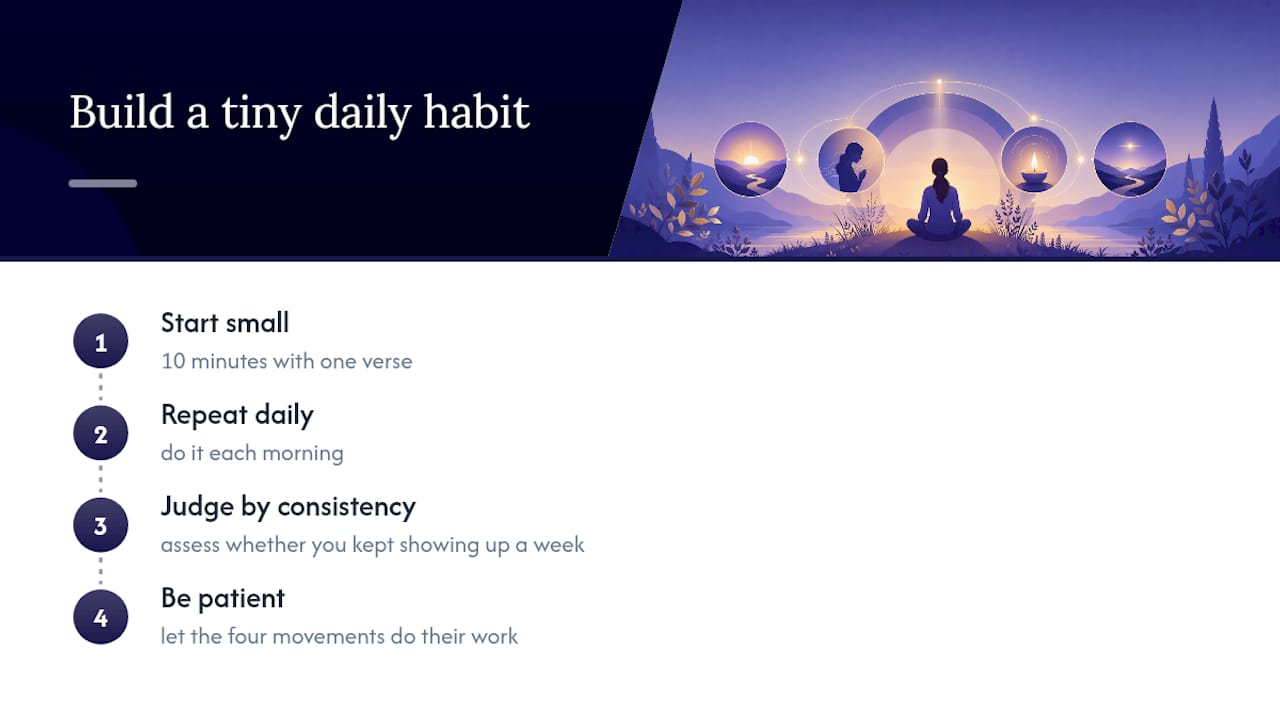
Most mornings, ten minutes with one verse before the day gets loud has done more for my patience than almost anything else I’ve tried. Nothing dramatic. Just a calmer starting point.
If you’re new to this, don’t judge the practice by how “spiritual” a single session felt. Judge it by whether you kept showing up a week later. Start small, repeat it, and let the four movements do their slow work.
— Nkosi
Let BibleManna Help You Choose What to Read Next
Picking a passage is often the part that stalls a lectio divina habit before it starts. BibleManna’s Bible Verses by Topic collection solves that by grouping short, context rich verses under themes like strength, encouragement, and faith, so you spend your session reading and praying instead of searching.
If you’d rather not choose at all, the Random Verse Generator hands you a passage in seconds, which works well on mornings when decision fatigue is the real obstacle. Prefer listening over reading some days? Sunday Night Study offers audio walkthroughs of the four step framework that pair well with a commute or a quiet walk. BibleManna isn’t the only way to build this habit, but it’s built specifically to remove the friction beginners hit first. Open the topical verse lists now and pick tomorrow’s passage before you close this tab.
Where to Read More About Lectio Divina
- The USCCB’s lectio divina guide covers the four movements and flexible timing in official Church language.
- Father Boniface’s introduction explains why the practice needs no special training.
- The Catholic Review’s explainer frames lectio divina as encounter, not academic study.
Sources
- Lectio Divina (USCCB)
- Introduction to lectio divina (Father Boniface)
- What is lectio divina? Rediscovering an ancient spiritual discipline (Catholic Review)
FAQ
What Are the Four Steps of Lectio Divina?
The four traditional movements are Lectio (read), Meditatio (reflect), Oratio (respond), and Contemplatio (rest), and they’re meant to flow into one another rather than function as rigid checklist items.
Is Lectio Divina Only for Catholics?
Lectio divina developed within Catholic monastic life, but it’s presented as a flexible, non-denominational framework that any Christian tradition can practice without special training.
Why Do Some People Consider Lectio Divina Controversial?
Some critics worry the meditative, reflective style opens the door to reading personal meaning into Scripture rather than its literal sense, which is why guidance stresses starting with what the text actually says before applying it to your life.
How Long Should a Lectio Divina Session Last?
Sessions can be as brief as 15 minutes, and the length matters far less than showing up consistently with a short, manageable passage.
Where Should a Beginner Find a Passage to Start With?
A single psalm verse, a line from the daily Gospel, or a themed pick from a resource like BibleManna’s topical verse lists all work well for a first session.