Come to Jesus Now: 3 Practical Steps to Live Matthew 11:28
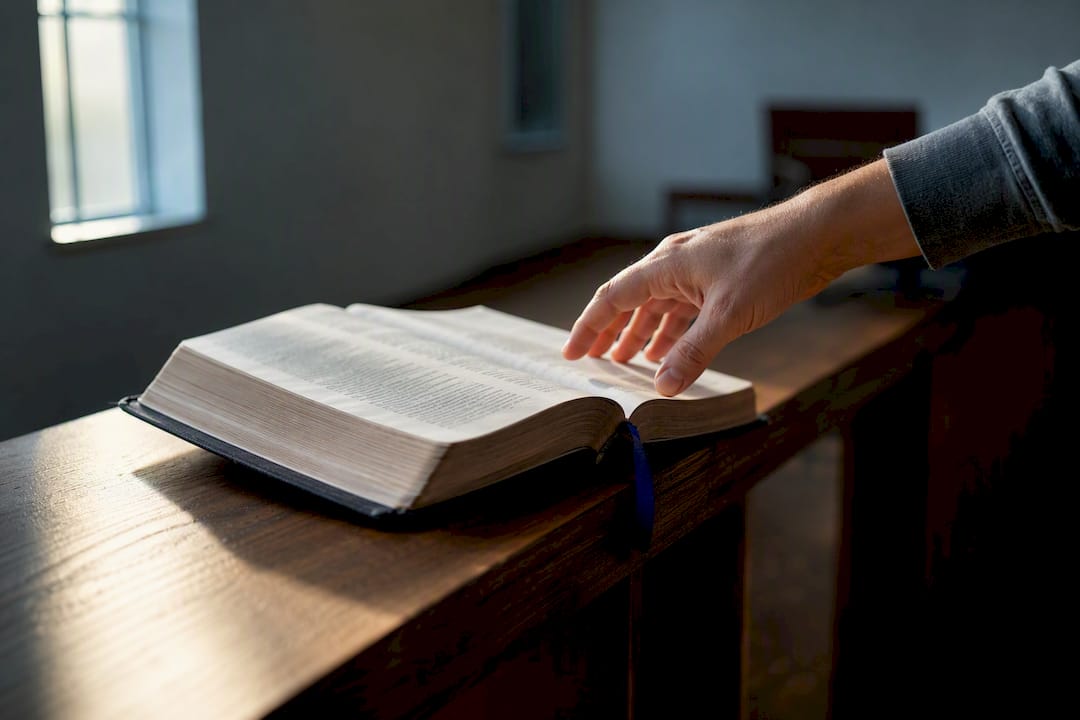
Matthew 11:28 is Jesus’ invitation to the spiritually exhausted to come to him for real rest, a promised relationship and discipleship rather than mere relief from tasks. The “weary and burdened” he addresses aren’t just tired workers. They’re people crushed under religious rule-keeping, guilt, and the exhausting effort to earn God’s approval. Jesus offers something different: himself.
TL;DR:
- Jesus’ call to come and rest applies to those overwhelmed by religious guilt and legalism, promising deep renewal through relationship, not just relief.
- The Greek verb deute emphasizes immediate response, urging believers to seek Christ now rather than delay; anapauo indicates ongoing inner renewal, not superficial relief.
- Rest in this context is both initial acceptance of faith and ongoing discipleship, contrasting sharply with the heavy burdens placed by legal systems and self-effort.
- Practical steps include naming burdens aloud in prayer daily and establishing rhythms of Scripture, prayer, and community to grow in Christ’s lighter yoke.
- Supporting verses like Hebrews 4 and Psalm 23 deepen the understanding that biblical rest is rooted in trust, provision, and union with Christ, available in the present day.
Table of Contents
- What Matthew 11:28 Says, Word for Word
- The Context Behind Matthew 11:28
- The Greek Words That Shape the Meaning of Matthew 11:28
- Is the Rest in Matthew 11:28 About Salvation or Daily Relief?
- How to Actually Live Out Matthew 11:28
- Where to Go Next With This Verse
- Scriptures That Echo the Rest of Matthew 11:28
- A Pastoral Note on Carrying This Verse
- Find More Rest in Scripture With BibleManna
- Sources
- FAQ
What Matthew 11:28 Says, Word for Word
The verse reads: “Come to me, all you who are weary and burdened, and I will give you rest” (Matthew 11:28). Stripped down, it’s an open invitation with a personal address. Jesus isn’t offering a technique or a philosophy. He’s offering himself as the destination.
A few things stand out even before you dig into the Greek:
- “Come” is a direct, personal call. Not “try harder” or “figure it out.”
- “Rest” is promised, not suggested. Jesus states it as a certainty: “I will give you rest.”
- The invitation is universal (“all you”) yet lands on each reader individually.
The Context Behind Matthew 11:28
Matthew 11:25-30 sits at the close of a discourse where Jesus first thanks God for revealing truth “to little children” rather than the intellectually proud, then rebukes towns like Chorazin and Bethsaida for rejecting him despite the miracles they witnessed. The invitation to rest follows both a moment of revelation and a moment of confrontation. Jesus isn’t offering comfort in a vacuum. He’s offering it right after establishing that he alone has the authority to reveal the Father, which is what makes the invitation credible rather than sentimental.
That sequence matters. The GotQuestions commentary on Matthew 11:28 notes that the offer comes directly after Jesus affirms his unique authority to reveal God, not as an isolated feel-good line. This connects to a much larger biblical pattern. Hebrews 4 develops the same theme, warning readers not to harden their hearts against the “rest” God offers, while framing that rest as something still available to those who believe. Matthew 11:28 isn’t a standalone comfort verse. It’s one entry point into a rest that runs through the whole of Scripture.
The Greek Words That Shape the Meaning of Matthew 11:28
Translation choices carry real weight here. The Greek word behind “come” is deute, an urgent, present-tense exhortation. It doesn’t mean “come whenever you’re ready.” It means “come now.” According to lexical notes from Precept Austin’s commentary on Matthew 11:28, that immediacy is baked into the grammar, which is part of why the verse reads less like a gentle suggestion and more like a rescue call.
“Rest” translates anapauo, a word that can mean simple physical relief but often carries the deeper sense of restoration, refreshment, renewal from the inside out. “Heavy-laden” comes from phortizo, meaning overloaded, weighted down past the point of coping.
Then there’s the yoke. In first-century farming, a yoke joined two animals so they could share a load together, guided by the stronger one. Jesus isn’t asking people to drop all effort. He’s asking them to trade a solo, crushing burden for a shared one where he does the heavy lifting.
A quick look at how translations handle the nuance:
- ESV: “Come to me, all who labor and are heavy laden” — emphasizes the weight of labor.
- NLT: “Come to me, all of you who are weary and carry heavy burdens” — leans toward emotional exhaustion.
- NASB: keeps close to the ESV’s structure, prioritizing literal accuracy over readability.
- Amplified: expands “rest” to include “ease and refreshment,” pulling out anapauo’s fuller sense.
Pro Tip: Read the verse in two or three translations back to back. The differences aren’t contradictions, they’re each translation choosing which shade of the original Greek to highlight.
Is the Rest in Matthew 11:28 About Salvation or Daily Relief?
Both, and that’s not a cop-out. Scholarly readings of the passage, including Nathan Bills’ treatment in Leaven, point out that Matthew 11:28-30 operates on more than one level at once. “Come” addresses the initial move toward Christ, the justification side of faith. “Learn from me” in verse 29 addresses the ongoing process of discipleship, the sanctification side. You don’t have to pick one reading over the other. The verse was built to hold both.
The sharper contrast, though, is with what Jesus is replacing. Matthew 23:4 describes religious leaders who “tie up heavy, cumbersome loads and put them on other people’s shoulders, but they themselves are not willing to lift one finger to help.” Luke 11:46 levels a similar charge. Jesus is directly answering that kind of leadership. His yoke is “easy” (Greek: chrestos, meaning well-fitted or useful) and his burden “light,” a deliberate contrast to a system that demanded endless compliance and offered no help carrying it.
The USCCB’s commentary on Matthew 11 describes this passage as “The Gentle Mastery of Christ,” drawing a line to Sirach’s older invitation to take up wisdom’s yoke, and noting that Jesus positions himself as the one who displaces a burdensome legal system rather than adding to it. That’s a meaningful theological claim: rest, in this verse, isn’t the absence of a yoke. It’s a different yoke, one that fits.
How to Actually Live Out Matthew 11:28
Believing the verse and experiencing it are two different things. A practical path looks something like this:
- Admit the weariness. Name what’s actually crushing you, whether it’s guilt, performance pressure, grief, or burnout. Vague tiredness is hard to bring anywhere; specific weariness has a place to go.
- Come, deliberately, and explore spiritual practice through Protein and Prayer to help cultivate daily rhythms of rest and renewal. This isn’t passive waiting. Bring the specific burden to Jesus in prayer, in plain language, without polishing it first.
- Learn. Rest isn’t a one-time transaction. Verse 29 calls it ongoing discipleship, watching how Jesus carried his own burdens and following that pattern.
Beyond that first sequence, rest tends to grow through repeated rhythms rather than single decisions: regular time in Scripture, honest prayer, a weekly Sabbath pause, and real connection with other believers who can carry weight alongside you. Pastors and leaders carry a responsibility here too. GotQuestions’ commentary on the verse warns against the exact failure Jesus rebukes in Matthew 23, leaders who pile on requirements instead of pointing people toward Christ’s lighter load.
Pro Tip: For one week, name your heaviest burden out loud in prayer every morning before anything else competes for your attention. Small, but it forces the “coming” part of the verse into an actual daily habit instead of a one-time idea.
Where to Go Next With This Verse
Try this short prayer as a starting point: “Lord, here is what I’m carrying today. I can’t hold it alone anymore. Teach me to walk at your pace instead of mine.”
A few resources worth pairing with that prayer:
- Browse Bible verses about trusting God if the weight you’re carrying involves control or fear.
- Read through Bible verses about faith when the burden feels like doubt.
- Use the free Bible study tools to generate a short daily reading around this theme.
- Consider joining a small group or Bible study where you can say the quiet part out loud, since community is part of how this rest actually takes shape.
Scriptures That Echo the Rest of Matthew 11:28
A handful of passages deepen the theme without repeating it:
- Hebrews 4:9-11 frames rest as a promise still open to believers, tied to trust rather than striving.
- Psalm 23:1-3 pictures a shepherd who “makes me lie down in green pastures,” rest as provision, not self-effort.
- Matthew 23:4 shows the burden Jesus is contrasting himself against, useful for seeing what he’s rescuing people from.
- Luke 11:46 parallels the Matthew 23 rebuke from a different angle in the same ministry period.
Reading these side by side with Matthew 11:28 shows that rest isn’t a one-off promise. It’s a thread running through the entire biblical story.
A Pastoral Note on Carrying This Verse
The people who lean on Matthew 11:28 hardest usually aren’t lazy. They’re the ones who’ve been trying the longest and quietest to hold everything together on their own. If that’s you, the invitation isn’t asking for more effort. Try the prayer above tonight and see what shifts.
— Nkosi
Find More Rest in Scripture With BibleManna
Matthew 11:28 is one verse, but weariness rarely shows up alone. It usually brings friends: worry, doubt, exhaustion, grief. Some Christian websites organize scripture by the specific thing you’re carrying instead of leaving you to search a whole Bible for the right verse on a hard day. Instead of scrolling through generic devotionals, you land directly on the passages that speak to your actual situation.
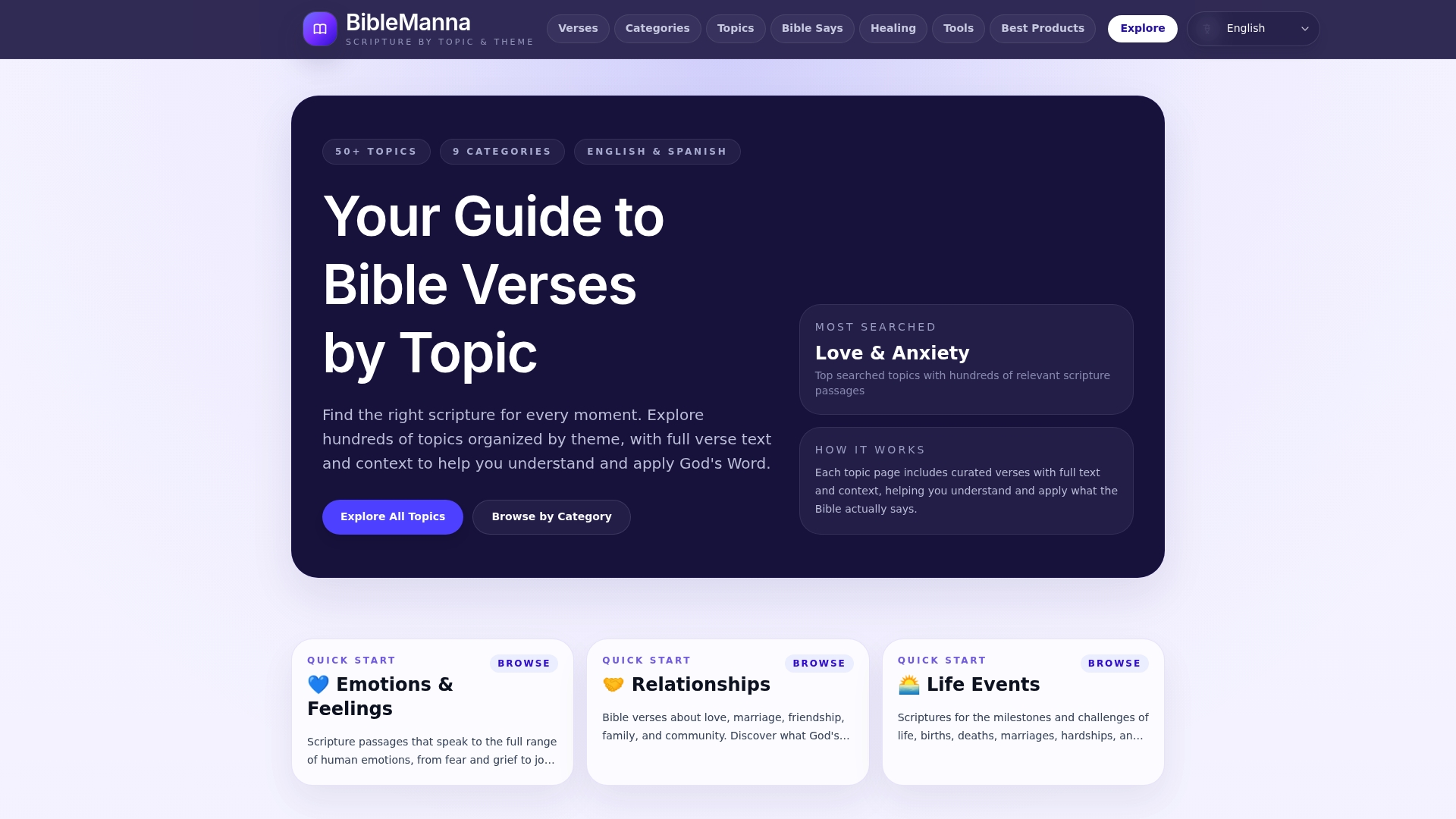
Start with the full Bible verses by topic library to find collections on trust, strength, and encouragement, or search biblical topics and concepts if you want to study “rest” alongside related themes like faith and grace. Either page is a solid next stop after sitting with Matthew 11:28.
Sources
- What is the significance of Jesus saying, ‘I will give you rest’ (Matthew 11:28)? — GotQuestions
- Matthew 11 — USCCB commentary
- Matthew 11:28 commentary — Precept Austin
FAQ
What is the meaning of Matthew 11:28?
Jesus invites those crushed by spiritual and religious burdens to come to him personally, promising real rest that flows from relationship and discipleship rather than self-effort.
How do I apply Matthew 11:28 to my life?
Name the specific burden weighing on you, bring it to Jesus directly in prayer, and commit to ongoing discipleship, learning from his example through Scripture, prayer, and Sabbath rhythms rather than treating rest as a one-time event.
What does “rest” mean in Matthew 11:28?
The Greek word anapauo points to restoration and refreshment, not just physical relief. It describes a deep, ongoing renewal that comes from union with Christ rather than a break from tasks.
Which generation will not pass away?
That phrase comes from a different passage, where Jesus discusses end-times prophecy. It isn’t connected to the rest offered in Matthew 11:28, which addresses present spiritual weariness rather than future events.