The Prodigal Son Meaning: A Complete Biblical Guide
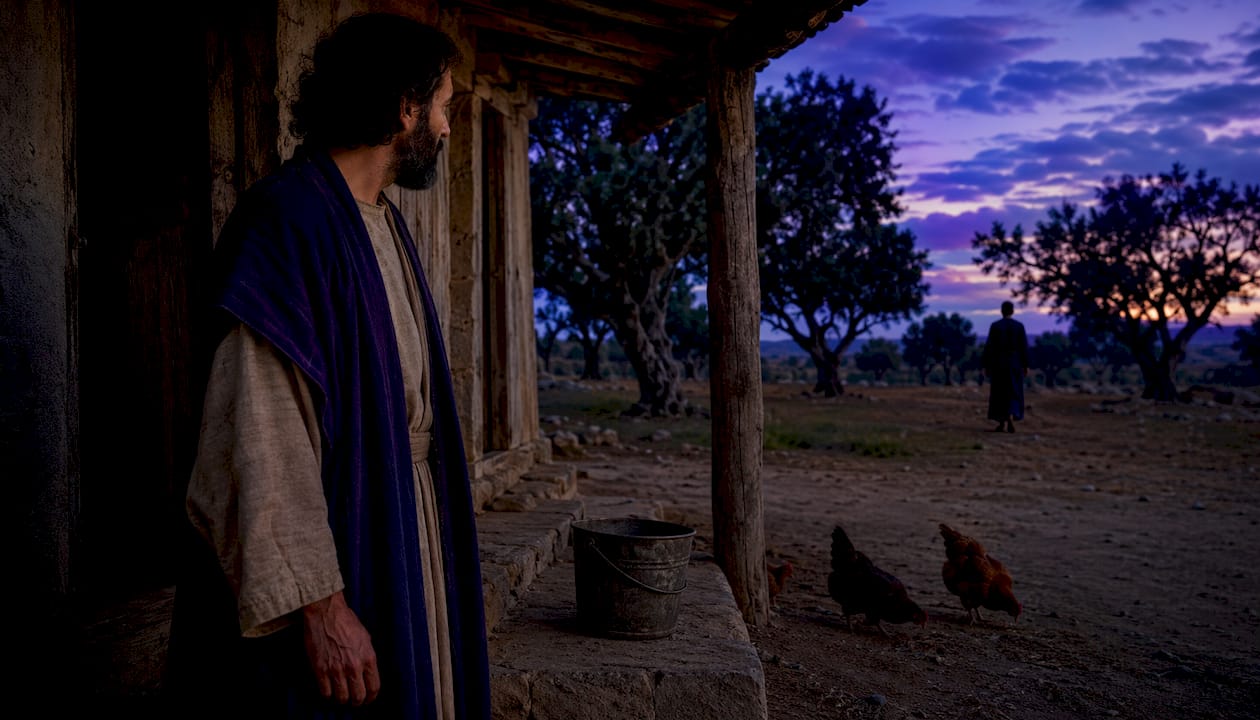
The prodigal son meaning is rooted in a single, often misunderstood word: “prodigal.” It does not mean “returning” or “repentant.” It means rashly and wastefully extravagant, derived from the 16th-century Latin prodigus and prodigere, meaning to squander. The parable’s title describes the younger son’s reckless behavior, not his homecoming. That distinction matters more than most people realize, because the modern habit of using “prodigal son” to mean simply “someone who came back” strips the story of its sharpest edge.
The parable appears only in the Gospel of Luke, specifically Luke 15:11–32, and it is one of the most theologically dense stories in the entire New Testament. Here is what the parable actually covers:
- The younger son demands his inheritance before his father’s death, a culturally shocking act.
- He wastes everything in reckless living, hits rock bottom, and resolves to return home as a servant.
- The father sees him from a distance, runs to meet him, and throws a lavish celebration.
- The older son, who stayed home and worked faithfully, refuses to join the feast and resents his father’s generosity.
- The parable ends without resolving the older son’s anger, leaving the reader to sit with the discomfort.
The Cambridge English Dictionary notes that in modern usage, “prodigal son” refers to someone who leaves home to do something disapproved of and later returns remorsefully. That figurative sense is now common in everyday speech and popular culture. But it captures only half the story, and arguably the less interesting half.
Table of Contents
- What does the prodigal son parable actually say?
- How do Catholic and Orthodox traditions interpret this parable?
- What are the major themes and symbols in the parable?
- How has the parable shaped art and culture?
- Explore the parable’s themes through scripture study
- How do Protestant traditions read the parable?
- What moral lessons does the parable teach?
- Do other religious traditions tell a similar story?
- Key Takeaways
- FAQ
What does the prodigal son parable actually say?
The parable opens with a wealthy man and his two sons. The younger son approaches his father with an extraordinary request: give me my share of the estate now. In the ancient Near East, this was tantamount to wishing your father dead. The father, without argument, divides his property between both sons.
The younger son converts his share to cash, travels to a distant country, and burns through it all. Luke 15:13 describes it plainly: he “squandered his wealth in wild living.” When a severe famine hits, he ends up feeding pigs for a local landowner, envying the carob pods the animals eat. For a Jewish audience, this detail was deliberately humiliating: pigs were unclean animals, and tending them represented the lowest possible degradation.
“When he came to his senses, he said, ‘How many of my father’s hired servants have food to spare, and here I am starving to death! I will set out and go back to my father and say to him: Father, I have sinned against heaven and against you. I am no longer worthy to be called your son; make me like one of your hired servants.’” — Luke 15:17–19 (NIV)
He rehearses a speech of contrition and heads home. What happens next is the parable’s most culturally charged moment. His father, who has apparently been watching the road, spots him while he is still far off. He runs to meet him. In Middle Eastern honor-shame culture, a patriarch did not run publicly. Running was undignified for an elder man of status. The father’s sprint is a deliberate act of social self-humiliation on his son’s behalf. Before the son can finish his rehearsed apology, the father calls for the finest robe, a ring, sandals, and the fatted calf to be slaughtered. That calf was typically reserved for major religious celebrations, which signals that this is not merely a family reunion. It is a full communal restoration.
The older son, returning from the fields, hears music and learns what has happened. His response is raw: he refuses to go inside. The father comes out to him, and the older son unloads his grievance. He has worked for years without reward, while his brother who wasted the family’s money gets a party. The father’s reply is gentle but firm: “You are always with me, and everything I have is yours. But we had to celebrate and rejoice, because this brother of yours was dead and is alive again; he was lost and is found.” The parable stops there, with the older son’s response left unwritten.
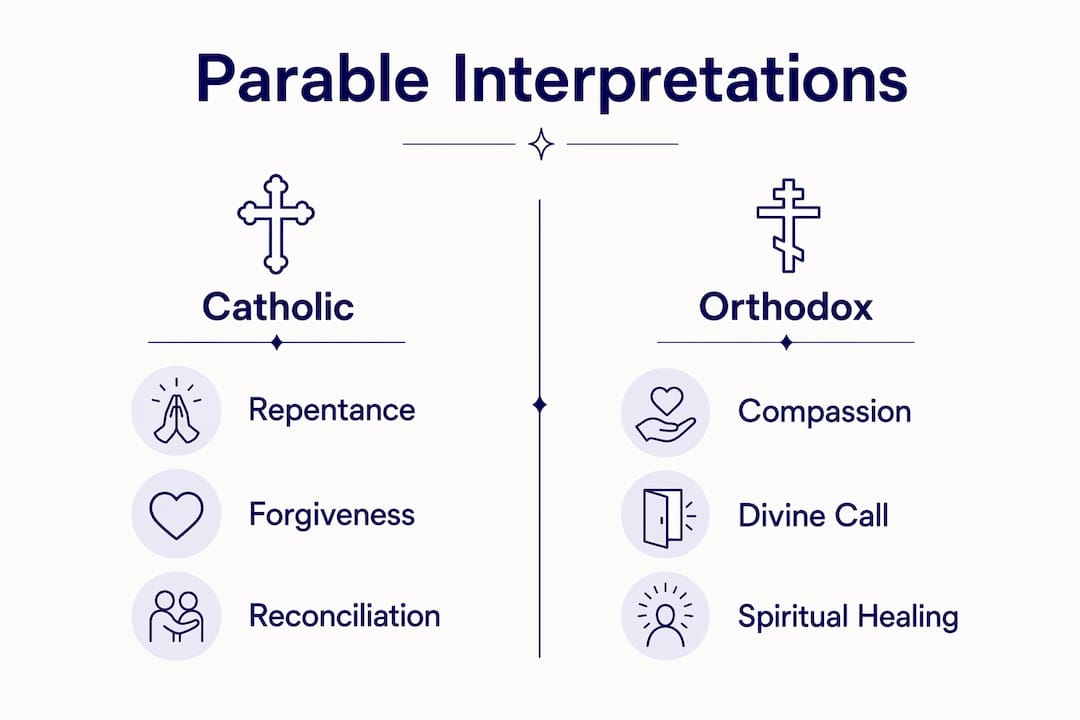
How do Catholic and Orthodox traditions interpret this parable?
The two oldest continuous Christian traditions read this parable through distinct but overlapping theological lenses.
The Catholic interpretation
Catholic teaching treats the parable as a master class in repentance, forgiveness, and the sacrament of reconciliation. The father’s unconditional welcome is understood as an image of God’s mercy, and the son’s journey from sin to contrition to restoration maps directly onto the structure of the sacrament: acknowledgment of sin, genuine sorrow, and return to the Father’s house (the Church).
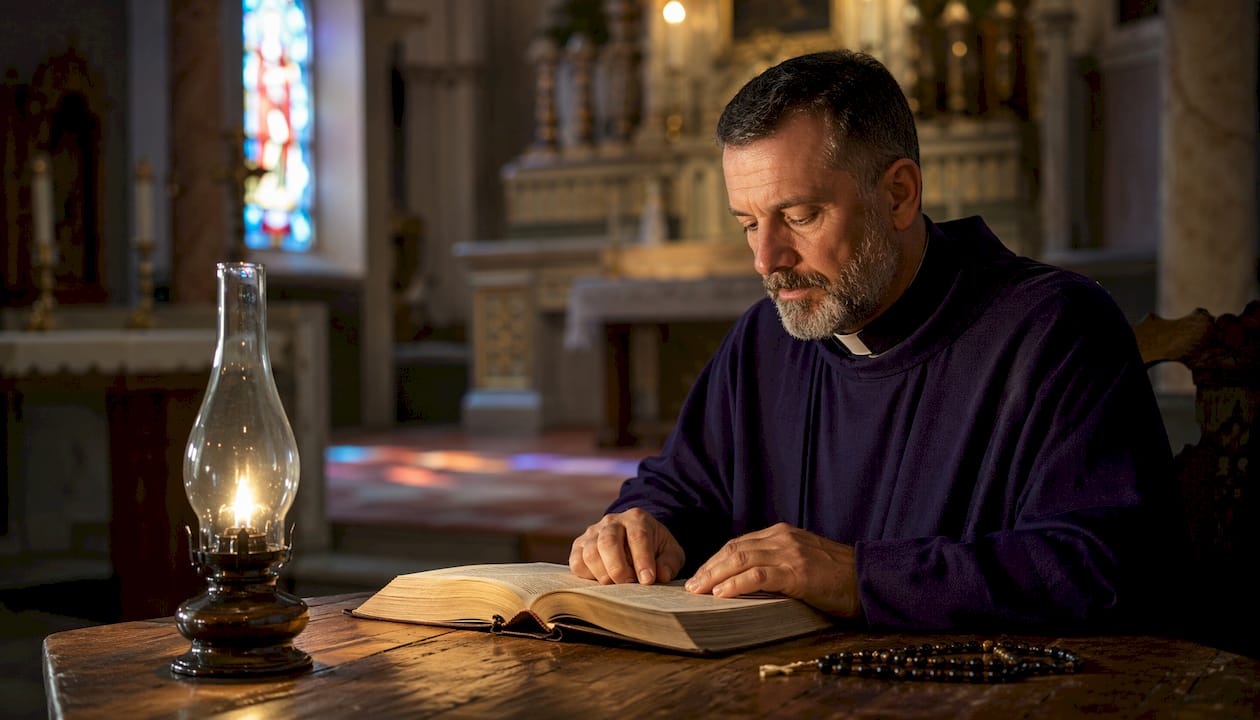
Catholic scholars have long noted that the parable is part of a trilogy in Luke 15, following the Lost Sheep and the Lost Coin. All three stories share the same structure: something valuable is lost, it is found, and there is rejoicing. The Catechism of the Catholic Church draws on this parable to illustrate that God’s mercy is not earned but freely given, and that the Church itself is the place of that restoration.
Key Catholic emphases include:
- The son’s return as a model of genuine repentance, not just regret.
- The father’s actions as a portrait of divine grace that precedes and exceeds human merit.
- The older son’s resentment as a warning against the sin of spiritual pride.
- The parable’s placement in Lent (read on the Fourth Sunday of Lent, Year C) as an invitation to self-examination.
The Orthodox interpretation
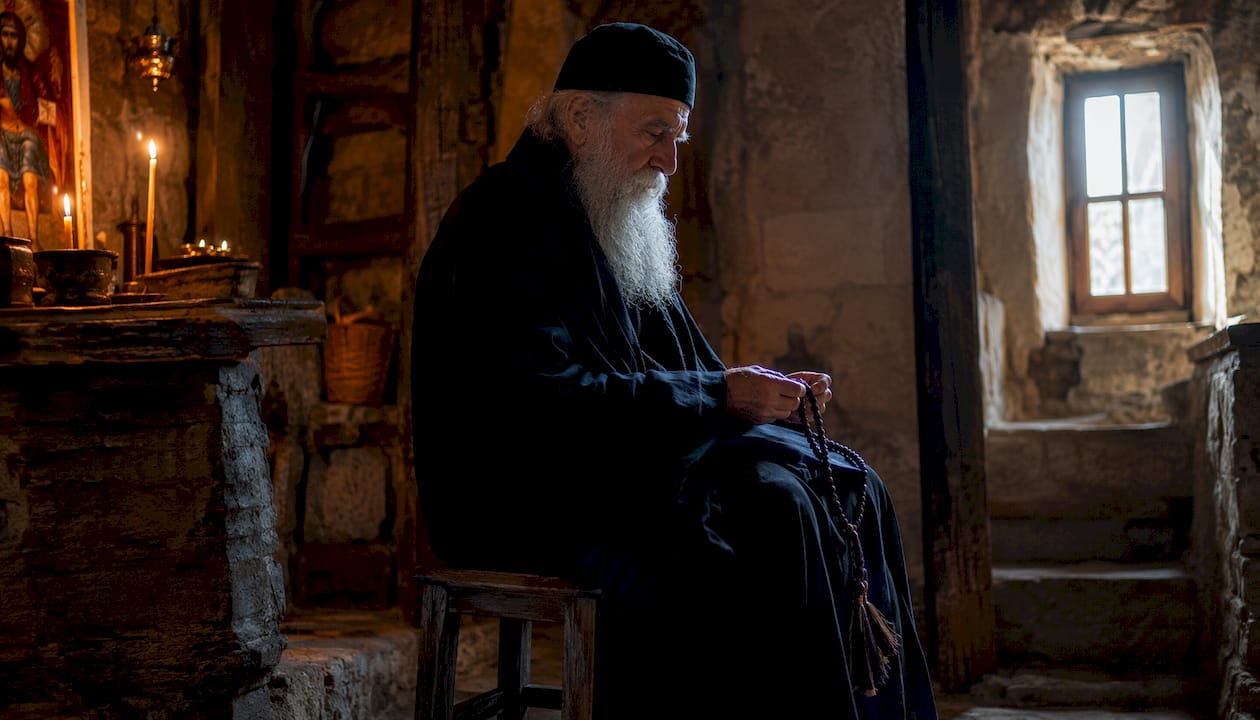
The Eastern Orthodox Church reads the parable with even greater theological density. Archpriest Victor Potapov describes it as containing “a multitude of themes difficult to enumerate,” including the historical contrast between God’s chosen people and the Gentiles, the nature of sin, and the full process of repentance. The Orthodox calendar devotes an entire Sunday to the parable, the Sunday of the Prodigal Son, which falls in the pre-Lenten period to prepare believers for the discipline of Great Lent.
Orthodox theology reads the father’s gifts allegorically:
- The best robe symbolizes baptismal grace, the restoration of the original dignity lost through sin.
- The ring represents the seal of the Holy Spirit.
- The sandals signify freedom, distinguishing the restored son from a barefoot slave.
- The fatted calf points to the Eucharist, the ultimate feast of communion with God.
St. Tikhon of Zadonsk captured the Orthodox spirit of the parable: “The compassionate God still calls to Himself all that have turned away, and He awaits them and promises them mercy.” For Orthodox Christians, the parable is not primarily about human moral effort but about the inexhaustible patience of God.
What are the major themes and symbols in the parable?
The parable operates on multiple levels simultaneously, which is why it has sustained theological commentary for two millennia.
Repentance as return, not just remorse. The younger son does not simply feel bad. He acts. He gets up, goes home, and accepts whatever status his father assigns him. The Greek word used in Luke 15:17, eis heauton de elthon (“he came to himself”), suggests a moment of interior awakening, a recovery of self-knowledge after a period of self-deception.
The father’s radical grace. The father’s running to meet his son was counter-cultural in a way that a modern Western reader can easily miss. In the honor-shame world of first-century Palestine, a father’s dignity was a community asset. By running, by absorbing the shame publicly, the father was shielding his son from the village’s judgment. He reached the son before the son reached the village. That is not sentiment. That is a deliberate act of protective, preemptive grace.
“The father’s running is not just emotion — it is theology. He absorbs the shame before the community can deliver it.” — Dr. James Carleton Paget, Faculty of Divinity, University of Cambridge
The two kinds of lostness. Scholars argue that the parable’s deepest structural insight is the parallel between the two sons. The younger son is lost outside the house, in visible, scandalous sin. The older son is lost inside the house, in invisible, respectable sin: resentment, entitlement, and a transactional view of his relationship with his father. Both are estranged. Only one knows it.
The unresolved ending. Dr. James Carleton Paget of the University of Cambridge points out that Jesus deliberately left the parable without a tidy conclusion. The older son’s response is never recorded. That open ending is not an oversight. It is an invitation. The original audience, the Pharisees and religious leaders who criticized Jesus for eating with sinners, were the older son. The parable ends with the father standing outside, pleading with the older son to come in. The question it leaves hanging: will you?
How has the parable shaped art and culture?
Few biblical stories have traveled as far beyond their original context as this one. The parable’s imagery, the wayward son, the forgiving father, the fatted calf, has been reproduced across centuries of Western art, literature, and everyday speech.
Rembrandt van Rijn’s The Return of the Prodigal Son (c. 1668), housed in the Hermitage Museum in St. Petersburg, is widely considered one of the greatest paintings in Western art. The image of the father’s hands resting on the kneeling son’s back, one hand firm and masculine, the other soft and maternal, has been interpreted as a visual theology of divine compassion. Art historian Kenneth Clark called it “a picture which those who have seen the original in Leningrad will never forget.”
The parable’s influence extends well beyond painting:
- Benjamin Britten composed the opera The Prodigal Son in 1968, the third of his three “church parables.”
- The phrase “prodigal son” entered English as a fixed idiom, used to describe anyone who returns after a long, wayward absence.
- Films, novels, and television series regularly invoke the archetype, from The Lion King to countless family dramas.
- In sports journalism, a star athlete returning to his original team is routinely called “the prodigal son.”
The cultural drift is significant. In popular usage, “prodigal” has almost entirely lost its original meaning of wasteful extravagance and now functions as a near-synonym for “returning.” This is a genuine semantic shift, and it matters theologically. When the word’s original sense disappears, so does the parable’s confrontational edge: the story becomes a warm homecoming narrative rather than a story about reckless sin, radical grace, and the danger of self-righteous religion.
Pro Tip: When you encounter “prodigal son” in a news headline or cultural reference, ask whether the writer means “wasteful” or simply “returning.” The answer usually reveals how much of the original story’s meaning has been retained.
Explore the parable’s themes through scripture study
The parable of the prodigal son is a gateway into some of the Bible’s richest themes: forgiveness, repentance, grace, and the nature of God’s love. Studying it well means going beyond the story itself and tracing those themes through the wider scriptural witness.
Biblemanna’s biblical concept of forgiveness provides exactly that kind of thematic depth, gathering key verses with context and background so you can see how forgiveness functions across both Testaments. For readers who want to sit with specific passages, the curated collection of Bible verses on forgiveness offers 68 scriptures organized for personal reflection and study.
Biblemanna’s tools for deeper engagement include:
- Topical verse collections organized around themes like repentance, mercy, and grace, each verse presented with its biblical context.
- Translation comparison tools that let you read a passage in multiple English versions side by side, useful for unpacking nuances like the Greek eis heauton de elthon in Luke 15:17.
- Thematic explainers that connect individual parables to broader biblical doctrines.
- Scripture quizzes that reinforce retention and deepen familiarity with key passages.
The parable of the prodigal son does not stand alone. It belongs to a cycle of three “lost and found” parables in Luke 15, and its themes echo through Paul’s letters, the Psalms, and the prophets. Biblemanna’s topical Bible verse collections make it straightforward to follow those threads wherever they lead.
How do Protestant traditions read the parable?
Protestant interpretation of the parable is broad, shaped by the diversity of denominations and theological traditions within Protestantism, but several emphases recur across Reformed, Lutheran, Baptist, and evangelical readings.
Justification by grace alone. Reformed and Lutheran traditions read the father’s unconditional welcome as a vivid illustration of sola gratia, grace alone. The son brings nothing to the table except his need. He cannot earn restoration; he can only receive it. This maps directly onto the Protestant doctrine that salvation is not achieved through moral effort or religious performance but received through faith in God’s freely given grace.
The parable as evangelistic text. Evangelical traditions have long used the parable as an evangelistic framework. The younger son’s journey from home to the far country to the pigpen to the father’s arms is read as the universal human story: creation, fall, repentance, and redemption. Billy Graham frequently referenced the parable in his crusades as a picture of God’s readiness to receive anyone who turns back.
The older son as the central warning. Many Protestant preachers argue that the parable’s most urgent message is directed at the older son, and by extension at religious people who believe their faithfulness entitles them to God’s favor. Timothy Keller’s The Prodigal God (2008) made this argument with particular force, contending that Jesus told the parable primarily to confront the self-righteous, not to comfort the wayward. Keller’s reading reframes the entire story: the real “lostness” is not the younger son’s debauchery but the older son’s moralism.
The father as the true protagonist. Across Protestant scholarship, there is growing consensus that the parable is misnamed. Scholars argue it might better be called the Parable of the Forgiving Father, shifting the center of gravity from the son’s sin to the father’s grace. This reading does not diminish the younger son’s story but insists that the father’s extraordinary behavior, running, embracing, restoring, celebrating, is the theological heart of the text.
What moral lessons does the parable teach?
The parable is not a simple morality tale with a single lesson. It carries several distinct moral claims, and they do not all point in the same direction.
Repentance is possible at any point. The younger son’s turnaround begins not with a religious experience but with hunger and clear thinking. “He came to himself” is the text’s description of the moment. The moral implication is that self-knowledge, honest recognition of where you are and how you got there, is the beginning of return. No special ritual is required. The movement toward home is enough.
Grace is not fair, and that is the point. The older son’s complaint is entirely reasonable by ordinary standards of fairness. He worked hard, stayed loyal, and received no party. His brother wasted the family’s resources and got a feast. The father does not argue that this is fair. He simply says: your brother was dead and is alive. Fairness is not the operating principle. Love is. The parable deliberately unsettles any theology that reduces God’s relationship with humanity to a merit system.
Self-righteousness is its own form of lostness. The older son’s resentment is not presented as a minor character flaw. It is the parable’s second crisis, given almost as much narrative space as the younger son’s story. The moral is pointed: you can be physically present in your father’s house and spiritually absent from it. Religious observance without love is not faithfulness. It is a different kind of running away.
Forgiveness precedes the apology. The father does not wait for his son to finish the rehearsed speech. He interrupts it with a robe and a ring. This is theologically significant: the restoration is not contingent on the quality of the son’s contrition. The father’s love was already moving toward the son before the son arrived. That sequence, grace first, then response, is the parable’s most countercultural claim.
Do other religious traditions tell a similar story?
The parable’s core structure, a son who leaves a father, squanders what he has been given, and eventually returns, appears in other religious and literary traditions, though with meaningful differences in emphasis and meaning.
The Lotus Sutra (Buddhism). The closest parallel in world religious literature is the Parable of the Lost Son in the Lotus Sutra, one of the most important texts in Mahayana Buddhism. In that story, a poor son wanders away from his wealthy father. Decades pass, and when the son eventually encounters his father again, he does not recognize him and is terrified by his father’s power and wealth. The father, rather than revealing himself immediately, employs the son as a laborer, gradually conditioning him to his company over many years. Only near death does the father publicly reveal their kinship. The son symbolizes any human being; the father symbolizes the Buddha; and their concealed kinship represents the Buddha-nature present in every sentient being. The contrast with the Lukan parable is instructive: in the Buddhist version, the father works gradually and indirectly, through a long process of preparation. In Luke, the father runs.
The Hebrew Bible. The parable draws on deep patterns within the Old Testament. The opening line, “A man had two sons,” immediately evokes Cain and Abel, Ishmael and Isaac, Jacob and Esau. Each of those pairs involves a reversal of expectation, the younger favored over the older, and each involves conflict over inheritance and blessing. The prodigal son story participates in that tradition while redirecting it: here, the father’s love is not exclusive but expansive, offered to both sons simultaneously.
Sufi tradition. Islamic mystical poetry, particularly the work of Rumi, returns repeatedly to the image of the soul as a wanderer who has strayed from its divine source and longs to return. The Masnavi’s opening image of the reed flute crying for the reed bed from which it was cut is structurally similar to the prodigal’s longing for home. The emphasis in Sufi readings falls on the soul’s inherent orientation toward God and the pain of separation, themes that resonate with the parable’s emotional core even without direct literary dependence.
Key Takeaways
The parable of the prodigal son is ultimately a story about the father, whose radical, preemptive grace challenges every human instinct toward fairness, merit, and self-sufficiency.
| Point | Details |
|---|---|
| “Prodigal” means wasteful | The word describes the son’s reckless extravagance, not his return home. |
| The father is the theological center | His running, embracing, and restoring the son illustrates divine grace that precedes human merit. |
| Two sons, two kinds of lostness | The younger son is lost in visible sin; the older son is lost in invisible self-righteousness. |
| The fatted calf signals full restoration | Reserved for major religious celebrations, its slaughter indicated communal and spiritual reinstatement. |
| The ending is deliberately unresolved | Jesus left the older son’s response unwritten, placing the question before his original audience, the Pharisees. |
FAQ
What is the real meaning of the prodigal son?
The real meaning centers on the father’s unconditional grace, not the son’s return. “Prodigal” means wastefully extravagant, describing the younger son’s reckless behavior, while the parable’s deeper message is that God’s love runs toward the sinner before the sinner finishes repenting.
What does it mean if someone is called a prodigal son?
In modern usage, it typically describes someone who left a group or family under disapproved circumstances and has now returned, often with regret. The Cambridge English Dictionary confirms this figurative sense, though the original biblical meaning emphasizes the wasteful extravagance that preceded the return.
Is “prodigal” a positive or negative word?
“Prodigal” is inherently negative in its original sense, meaning recklessly wasteful. Its modern figurative use has softened it into something closer to neutral, associated with return and redemption rather than squandering, but that shift represents a genuine loss of the word’s original force.
What is the parable of the prodigal son about in Luke 15?
Luke 15:11–32 tells of a younger son who demands his inheritance early, wastes it, and returns home in desperation, only to be received with extravagant joy by his father. The parable was told in direct response to Pharisees who criticized Jesus for welcoming sinners, making the older son’s resentment a pointed mirror for his original audience.