Topical Bible Study: A Practical Guide for 2026
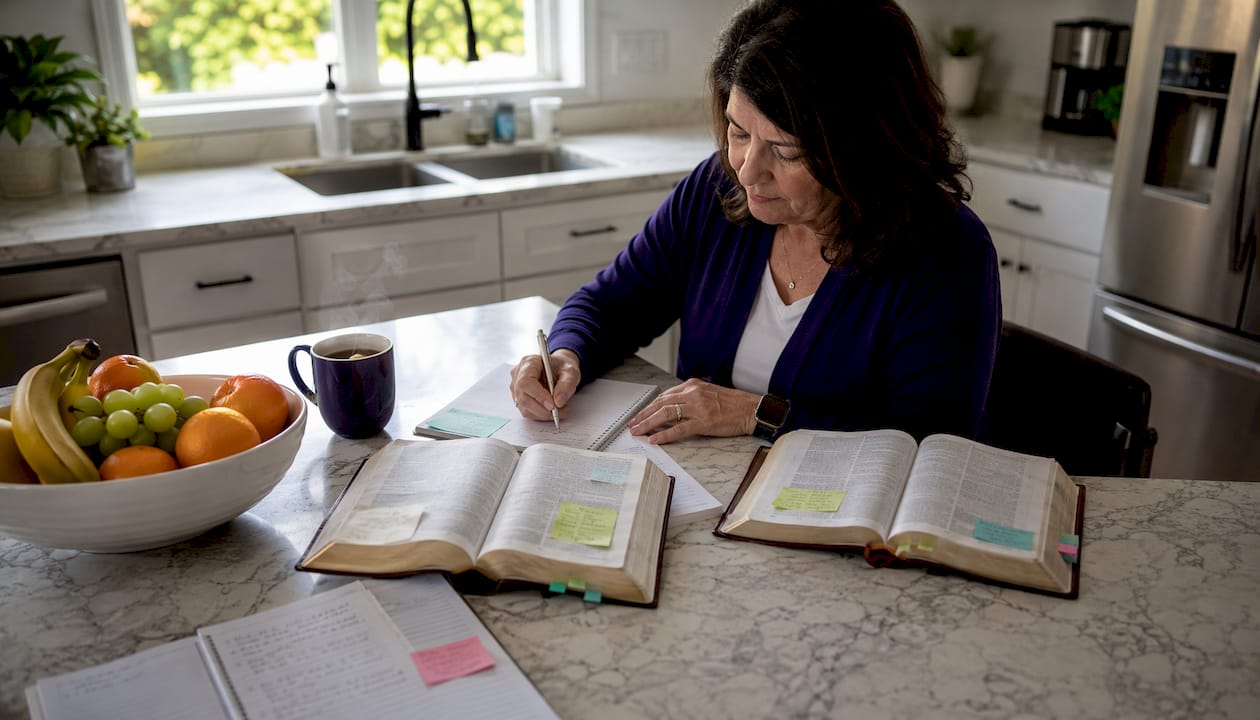
A topical Bible study means choosing a specific theme, then gathering every relevant passage you can find across both Testaments to examine what Scripture says about that subject as a whole. Instead of reading Genesis through Revelation in sequence, you zero in on one question: What does the Bible say about forgiveness? About anxiety? About grace? The result is a concentrated, often surprising portrait of a single truth drawn from dozens of different voices and centuries.
Common topics include prayer, faith, fear, identity, suffering, and repentance. The method suits both personal devotion and small group settings because it meets people where they are, connecting Scripture directly to whatever season of life they are navigating. Tools like concordances, topical Bibles, and digital indexes such as OpenBible.info make verse-gathering far more manageable than it sounds.

A few things topical study is not: it is not a word study (which traces a single term through its original language), and it is not sequential reading (which follows the biblical narrative from start to finish). Each method has its place, and the strongest students use all three.
Table of Contents
- What are the real benefits and cautions of this approach?
- How to conduct a topical Bible study step by step
- Which resources actually help you study the Bible by topic?
- Common pitfalls and how to avoid them
- How to facilitate group discussion during a topical study
- Biblemanna makes topical scripture study easier
- Key Takeaways
- FAQ
What are the real benefits and cautions of this approach?
Benefits worth knowing:
- Topical study fills the mind rapidly with a comprehensive view of one subject, which is why both Rev. R. A. Torrey and D. L. Moody championed it. Moody’s deep dive into “Grace” reportedly transformed his preaching.
- Choosing a topic tied to your current life situation, whether anxiety, forgiveness, or wisdom, sharpens motivation in a way that assigned sequential reading rarely does.
- For groups, a shared theme gives everyone a common entry point regardless of their Bible knowledge level.
Cautions that matter:
- Topical study should not replace cover-to-cover reading. Torrey himself warned that exclusive topical study risks a fragmented understanding of God’s Word, since the Bible’s narrative arc carries meaning that verse collections cannot fully replicate.
- Digital tools can encourage proof-texting: pulling a verse out of context to confirm what you already believe. Experts consistently flag this as the most common mistake beginners make.
- Skipping the surrounding text of any passage is where misinterpretation starts.
Pro Tip: Before you study a verse, read the full chapter it lives in. Context is not optional; it is the difference between understanding what a passage means and what you want it to mean.
How to conduct a topical Bible study step by step
-
Choose a focused, manageable topic. “God’s love” is broad enough to fill a library. “God’s love in moments of failure” is something you can actually study in a sitting. Starting narrow keeps the study motivational and prevents overwhelm.
-
Use the right tools to locate verses. A printed concordance like Strong’s works well. Digital options like Blue Letter Bible or Biblemanna’s topical verse collections let you search by theme instantly and see verses with their surrounding context.
-
Gather key passages from both Testaments. Pulling from across both Testaments gives you a fuller picture. Old Testament passages often establish the foundation; New Testament passages show fulfillment or application.
-
Study each passage in context. For every verse, ask: Who wrote this? To whom? What genre is this (poetry, prophecy, letter, narrative)? What comes before and after? This step is the one most often skipped, and skipping it is where bad theology starts.
-
Identify patterns and develop themes. After reading all your passages, look for repeated ideas, tensions, and progressions. Where does the Bible seem to emphasize something? Where does it qualify or complicate it?
-
Apply what you find. Applying insights to daily life is what separates study from mere information-gathering. Write down one concrete change in belief or behavior the study is calling you toward.
-
Follow Torrey’s standard: be systematic and exact. Do not stop at the first five verses that confirm your initial hunch. Work through the topic thoroughly before drawing conclusions.
Which resources actually help you study the Bible by topic?
The tools below range from free digital indexes to curated editorial platforms:
- Biblemanna organizes scripture across more than 50 themes, presenting each verse with full text and contextual background. Topics span emotions, relationships, life events, and theological concepts. The site also offers a translation comparison tool and a random verse generator, which makes it genuinely useful beyond simple verse lookup. Spanish and Italian access is available for multilingual groups.
- OpenBible.info provides a searchable topical index built from community-tagged verses. It is fast and free, though it works best as a starting point rather than a complete study resource.
- Blue Letter Bible offers original-language tools alongside topical search, making it a strong choice when you want to go deeper into word meanings.
- TopicalBibleStudyLessons.com provides downloadable lesson plans structured for group use, which saves significant prep time for small group leaders.
- Most Powerful Prayers app includes topical prayer and scripture collections organized for daily devotional use, a practical companion for personal study.
- Traditional concordances (Strong’s, Young’s) remain reliable for thorough verse-gathering when you want to work without a screen.
The strongest approach combines at least one digital tool with a printed concordance and, when possible, a study Bible with cross-references. No single resource covers everything.
Common pitfalls and how to avoid them

The biggest trap in thematic study is confirmation bias: you pick a topic, find three verses that say what you hoped, and stop there. The fix is simple but requires discipline. Commit to reading every passage you find on a topic, not just the ones that feel comfortable.
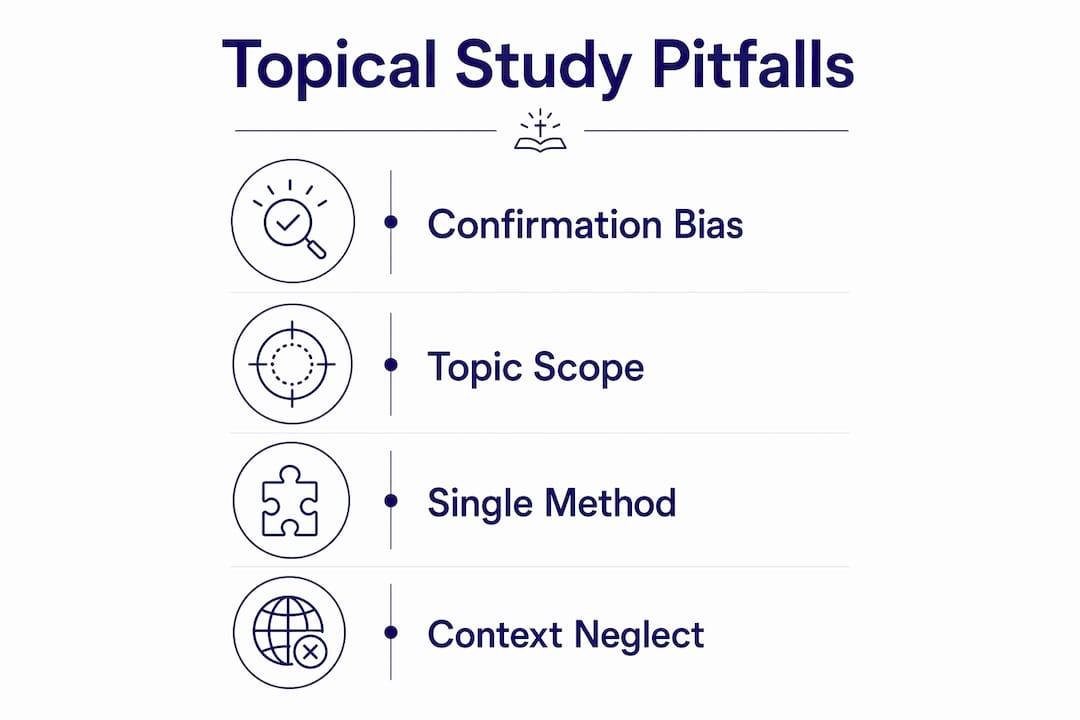
A second common problem is topic scope. Beginners often choose subjects so large (“love,” “faith”) that they cannot make meaningful progress in a single session. Narrowing the question, “What does faith look like when circumstances contradict God’s promises?” produces far more usable insight.
Finally, many students treat topical study as their only method. Torrey’s warning holds: without sequential reading alongside it, you will eventually develop blind spots about how biblical books and themes connect to each other.
How to facilitate group discussion during a topical study
Assign passages in advance so participants arrive having read the context, not just the verse. Open with a grounding question: “What surprised you about what Scripture actually says here?” That question surfaces assumptions and gets people talking honestly rather than performing.
Rotate who leads the discussion each week. It distributes ownership and prevents the group from becoming dependent on one person’s interpretation. When disagreement arises about what a passage means, treat it as a research prompt rather than a problem: “Let’s look at the surrounding chapter together.”
Close every session with a concrete application question: “What is one thing from today’s study you want to carry into the week?” Application is what makes the study stick.
Biblemanna makes topical scripture study easier
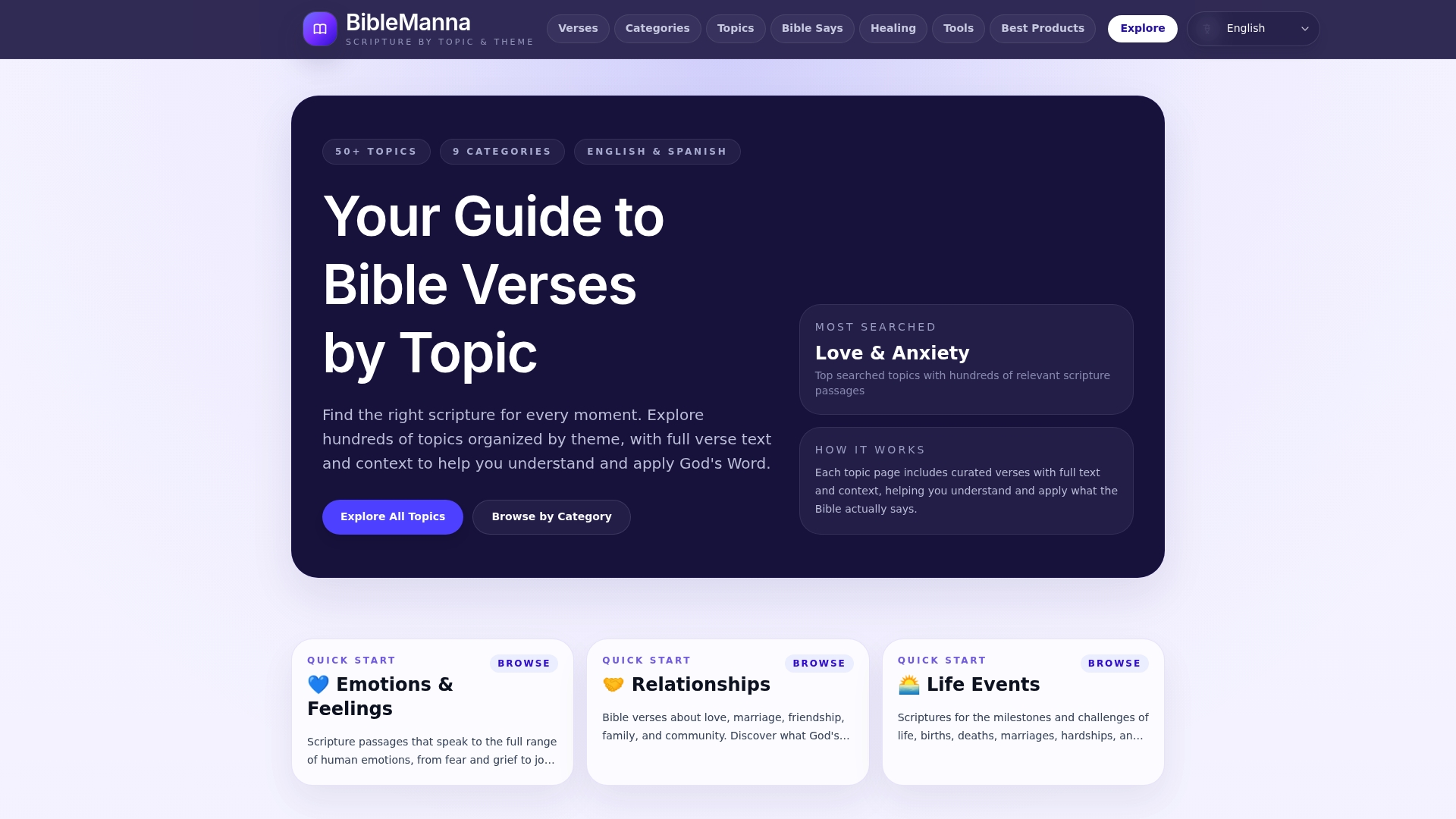
Biblemanna was built for exactly the kind of study this article describes. Rather than handing you a raw list of search results, it gives you curated verse collections organized by theme, each with the full passage text and enough context to understand what you are reading. Topics cover everything from encouragement and strength to faith, work, and self-worth.
If you are leading a small group, the themed pages give you a ready-made scripture foundation without hours of prep. If you are studying alone, the editorial explainers help you move past surface-level reading. Biblemanna is free to use, available in English, Spanish, and Italian, and requires no account to access any of its content. Start with a topic that matters to you right now and see what Scripture actually says about it.
Key Takeaways
Topical Bible study works best when it combines focused topic selection, contextual reading, and regular application to daily life.
| Point | Details |
|---|---|
| Start narrow | Choose a specific angle on a topic rather than a broad theme to keep study manageable. |
| Context is non-negotiable | Read the full chapter around every verse to avoid misinterpretation. |
| Gather 10–20 passages | Drawing from both Testaments gives a fuller, more accurate picture of any theme. |
| Balance your methods | Topical study complements but should not replace sequential Bible reading. |
| Biblemanna as a resource | Biblemanna offers curated topical verse collections with context across 50+ themes, free and multilingual. |
FAQ
What is a topical Bible study?
A topical Bible study is a method of studying Scripture by selecting a specific theme and gathering all relevant passages from across the Bible to understand what God’s Word says about that subject comprehensively.
Is topical Bible study good for beginners?
Yes. Beginners benefit from its question-driven structure and free tools like Blue Letter Bible or Biblemanna, which simplify verse-finding. Starting with a personally meaningful topic, such as anxiety or forgiveness, keeps motivation high.
What is the SOAP Bible study method?
SOAP stands for Scripture, Observation, Application, and Prayer. It is a structured journaling method where you write out a verse, record what you observe, apply it to your life, and close with prayer. It pairs well with topical study as a way to process individual passages.
How many verses should I study per topic?
Gathering 10–20 key passages from both the Old and New Testaments gives enough material to identify patterns and develop a theme without becoming unmanageable for a single study session.
What is the biggest mistake in topical Bible study?
Reading verses out of context to confirm a pre-existing belief. The fix is to read the full chapter surrounding every passage before drawing any conclusions about what it means.