Unforgivable Sin Meaning: What Scripture Actually Says
The unforgivable sin has one biblical name: “blasphemy against the Holy Spirit.” Jesus names it directly in Matthew 12:31-32, Mark 3:28-29, and Luke 12:10, and in each passage he ties it to a specific, deliberate rejection of the Spirit’s work, not a stray thought or a bad day.
Here’s the reassurance most readers actually need first. If you’re anxious that you may have committed it, that anxiety is itself strong evidence you haven’t. Denison Forum and other pastoral writers point out that genuine final impenitence produces no guilt, no desire to repent, and certainly no worry. A troubled conscience is a sign the Spirit is still working on you, not a sign you’ve shut him out.
Before going further, read these three passages for yourself:
- Matthew 12:31-32
- Mark 3:28-29
- Luke 12:10
The rest of this piece walks through what those verses mean in context, how major Christian traditions interpret them, and what to actually do if this question is keeping you up at night.
Key Takeaways
The unforgivable sin is a settled, final rejection of the Holy Spirit’s witness, not an isolated act, thought, or moment of doubt.
| Point | Details |
|---|---|
| One biblical name | The New Testament calls it “blasphemy against the Holy Spirit” in Matthew 12, Mark 3, and Luke 12. |
| Requires knowledge and finality | The sin involves deliberately, knowingly attributing God’s work to Satan, not confusion or ignorance. |
| Worry is a good sign | Genuine final impenitence produces no guilt or desire to repent, so fearing it usually means you haven’t committed it. |
| Traditions converge pastorally | Catholic, Reformed, Arminian, and Orthodox writers differ on mechanics but agree anxious believers are not at risk. |
| Confession is the remedy | 1 John 1:9 promises forgiveness for confessed sin, and prayer plus community support address the underlying fear. |
Table of Contents
- What Does the Bible Say About the Unforgivable Sin?
- What Prompted Jesus’ Warning About Blasphemy?
- How Do Different Traditions Interpret the Unforgivable Sin?
- Can a Christian Commit the Unforgivable Sin?
- Why This Warning Gets Misunderstood More Than Almost Any Other
- Sources
- FAQ
What Does the Bible Say About the Unforgivable Sin?
All three Synoptic Gospels record a version of this warning, and reading them side by side clarifies what Jesus is actually condemning. Matthew 12:31-32 is the fullest version: Jesus says every sin and blasphemy can be forgiven, “but blasphemy against the Spirit will not be forgiven,” adding that speaking against the Son of Man can be pardoned, but speaking against the Holy Spirit cannot, “either in this age or in the age to come.”
Mark 3:28-29 keeps the same structure but adds a phrase that theologians lean on heavily: whoever blasphemes against the Holy Spirit “is guilty of an eternal sin.” Luke 12:10 repeats the Son of Man versus Spirit contrast in a shorter form, set in a different teaching context about confessing Christ before others.
A few related passages come up constantly in this discussion, even though they don’t use the word “blasphemy”:
- Hebrews 6:4-6 and Hebrews 10:26-29, which describe the danger of deliberately falling away after tasting the truth
- 1 John 5:16, which mentions a “sin that leads to death”
- John 16:8-9, where Jesus describes the Spirit’s role in convicting the world of sin
None of these texts is identical to the Matthew/Mark/Luke warning, but writers across traditions often connect them because they share the theme of a settled, informed rejection of God rather than an isolated act.
What Prompted Jesus’ Warning About Blasphemy?
The context matters more than most people realize. In Matthew 12 and Mark 3, Jesus had just healed a man who was blind, mute, and demon possessed, a public, undeniable act of divine power. The Pharisees, who had already seen his miracles and heard his teaching, responded by claiming he cast out demons “by Beelzebul, the prince of demons.”
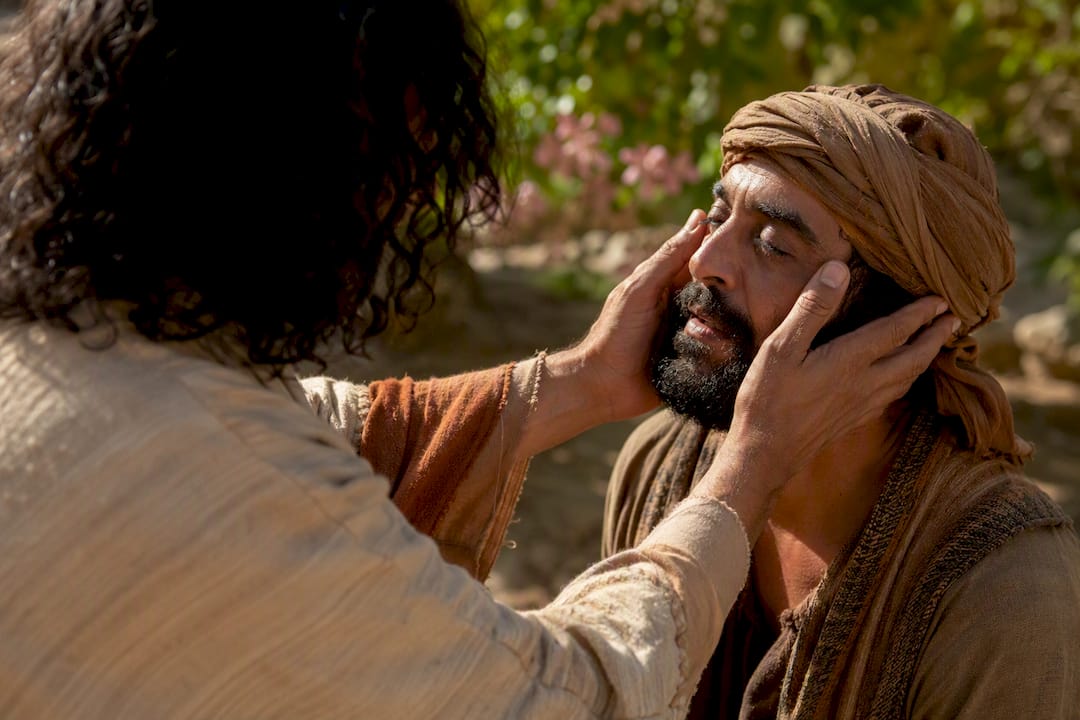
That’s the accusation Jesus is answering. He isn’t warning casual skeptics or confused seekers. He’s addressing religious insiders who had every reason to recognize the Spirit’s work and chose instead to call it satanic. Ligonier Ministries frames this as the paradigmatic case: attributing the Spirit’s own activity to the devil, knowingly and publicly.
Three things worth remembering from this scene:
- The accusers weren’t outsiders; they had witnessed the miracle firsthand.
- Their claim wasn’t confusion; it was a deliberate relabeling of good as evil.
- Jesus’ warning follows immediately, suggesting the sin he describes matches this exact pattern of informed, malicious rejection.
How Do Different Traditions Interpret the Unforgivable Sin?
Theologians agree on the label, blasphemy against the Holy Spirit, but they don’t fully agree on what triggers it in a modern believer’s life. Four readings show up most often.
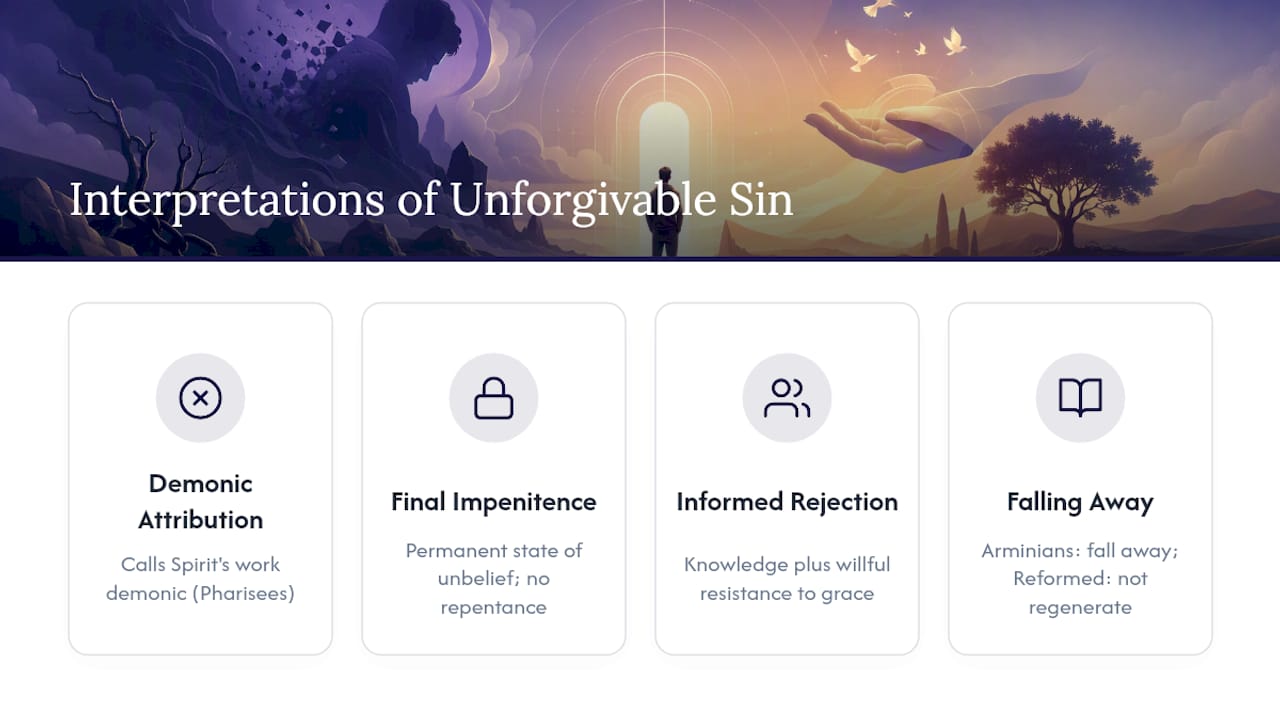
Attributing the Spirit’s work to Satan. This is the narrowest and most textually direct view: the sin is specifically calling God’s work demonic, as the Pharisees did. Ligonier’s commentary leans this direction, tying the sin tightly to its original setting.
Final impenitence, a heart that never turns back. The Gospel Coalition represents this broader reading: the sin isn’t one act but a settled, permanent state of unbelief. God doesn’t refuse to forgive a repentant sinner; someone who commits this sin has closed the door on repentance entirely.
A public, malicious rejection by informed insiders. This view stresses that the sin requires real knowledge of the truth, not ignorance. Augustine and later Aquinas both wrote about “sins against the Spirit” that harden through willful resistance to grace, and Catholic teaching has historically framed this as the sin of “final impenitence,” dying deliberately unrepentant.
Falling away as described in Hebrews. Reformed and Arminian writers sometimes connect Hebrews 6 and 10 to this discussion, though they disagree sharply on what it implies. Arminian readers have historically taken Hebrews’ warnings as evidence that genuine believers can fall away permanently; Reformed expositors typically argue the passage describes people who were never truly regenerate to begin with.
Blasphemy against the Spirit is “guilty of an eternal sin,” not because God’s mercy has limits, but because the person has permanently rejected the only means by which mercy reaches them.
Pro Tip: Don’t try to pin the unforgivable sin to a single verse alone. Read Matthew 12, Mark 3, and Luke 12 together with the immediate narrative context; the meaning gets much clearer when you see who Jesus is actually talking to.
Across Catholic, Reformed, Arminian, and Orthodox traditions, the pastoral conclusion converges even when the mechanics differ. Fr. Lawrence Farley, writing from an Orthodox perspective, locates the warning against people actively and knowingly rejecting the Kingdom, not those wrestling with doubt. Catholic teaching emphasizes final impenitence at death. Reformed writers emphasize a hardened heart that no longer responds to the Spirit’s call. Every tradition agrees on one point: worry and grief over sin are not symptoms of this condition.
Can a Christian Commit the Unforgivable Sin?
The consensus answer is no, and the reasoning is worth understanding rather than just accepting. The mechanism behind this sin is persistent, final rejection, a heart so hardened it no longer responds to conviction. GotQuestions puts it plainly: the practical modern equivalent is dying in permanent, willful unbelief, refusing the Spirit’s convicting work until the end.
If you’re still reading this out of genuine fear, here are signs that fear is misplaced:
- You feel ongoing conviction about sin rather than indifference to it.
- You want to repent, even if you don’t know exactly how.
- You grieve over your sin instead of feeling nothing.
- You’re actively seeking an answer to this very question.
If you want concrete next steps, take them in order:
- Confess specifically. 1 John 1:9 promises that God forgives those who confess, “faithful and just to forgive us our sins.”
- Pray honestly about the fear itself, not just the sin you’re worried about.
- Talk to a pastor or mature believer rather than sitting with this alone.
- Return to Scripture regularly. Reading Bible verses about forgiveness or exploring what the Bible says about forgiveness can anchor you in God’s actual promises rather than your fears.
The very concern someone feels about having committed the unforgivable sin is strong evidence they haven’t. True final impenitence carries no guilt and no desire to repent.
Pro Tip: If a friend confides this fear to you, resist the urge to argue theology first. Ask what’s happening in their life that triggered the worry; the fear is usually rooted in unrelated guilt or scrupulosity, not an actual act of blasphemy.
For deeper study on the flip side of this warning, God’s grace toward repentant sinners, Bible verses about grace and readers walking through devotional material at Spirit of His Mouth both offer useful next steps.
Why This Warning Gets Misunderstood More Than Almost Any Other
Most anxiety around this topic comes from treating a warning aimed at hardened, informed rejecters as if it applied to anyone who’s ever had an intrusive blasphemous thought. That’s a category error, and it’s an avoidable one once you read the Gospel accounts in context.
The conventional advice, “just don’t worry about it,” undersells the question. People deserve the actual reasoning: the sin requires knowledge, deliberateness, and finality, three things an anxious, repentant heart doesn’t have. What gets underrated is how consistently every major tradition, Catholic, Reformed, Arminian, Orthodox, lands on the same pastoral conclusion despite different theological routes to get there. That convergence matters more than the doctrinal disagreements.
If you take one thing from this, take this: Desiring God is right to put the warning next to the promise. Jesus says “all sins will be forgiven” for those who come to him in faith almost in the same breath as this warning. Read them together, not the warning alone.
Sources
- The Unpardonable Sin (The Gospel Coalition)
- What Is the Unforgivable Sin? (Desiring God)
- What is the unpardonable sin? (Ligonier Ministries)
- What is the unpardonable sin? (Denison Forum)
- Gotquestions
FAQ
What Are Considered Unforgivable Sins?
Scripture names only one, blasphemy against the Holy Spirit, described in Matthew 12:31-32, Mark 3:28-29, and Luke 12:10. It isn’t a list of specific acts but a settled, final rejection of the Spirit’s testimony about Christ.
Which Generation Will Not Pass Away?
This phrase comes from a different passage about end-times prophecy, not the unforgivable sin, so it isn’t directly connected to blasphemy against the Holy Spirit.
What Does the Unforgivable Sin Really Mean?
It means a permanent, informed, and willful rejection of the Holy Spirit’s work, the kind of hardened unbelief that never turns toward repentance, according to The Gospel Coalition.
How Does Someone Commit the Unforgivable Sin?
By persistently and knowingly attributing the Spirit’s work to Satan or by dying in final, unrepentant unbelief, refusing the Spirit’s conviction until the end, as GotQuestions explains.